Nature Notebook

CASTLE, LAKE, ISLAND MONASTERY

– trace O’Donoghue’s remains frozen in rock

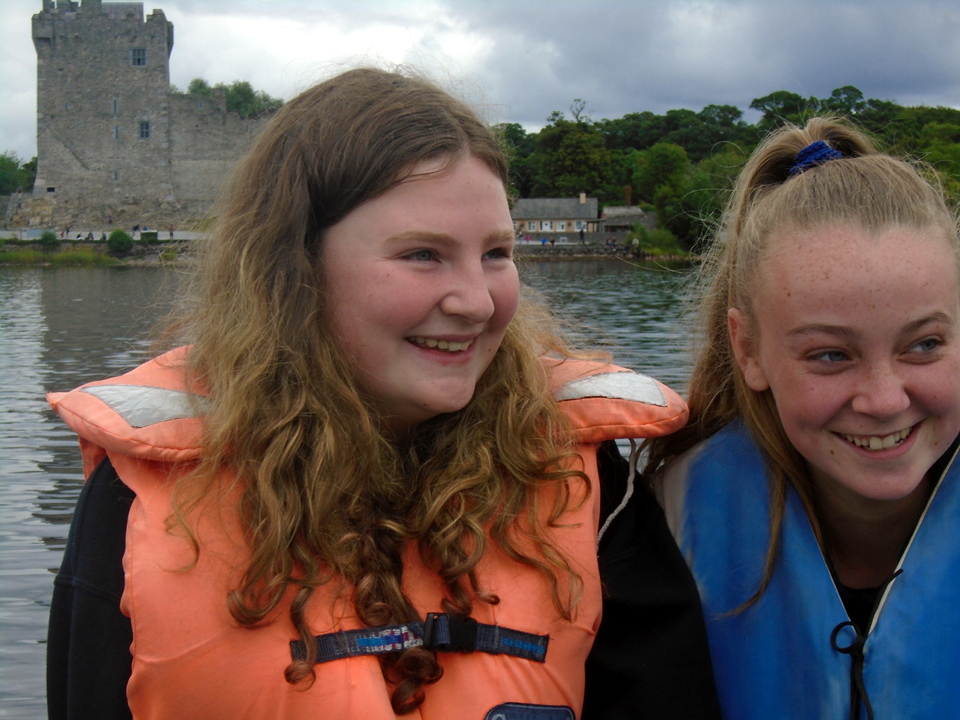
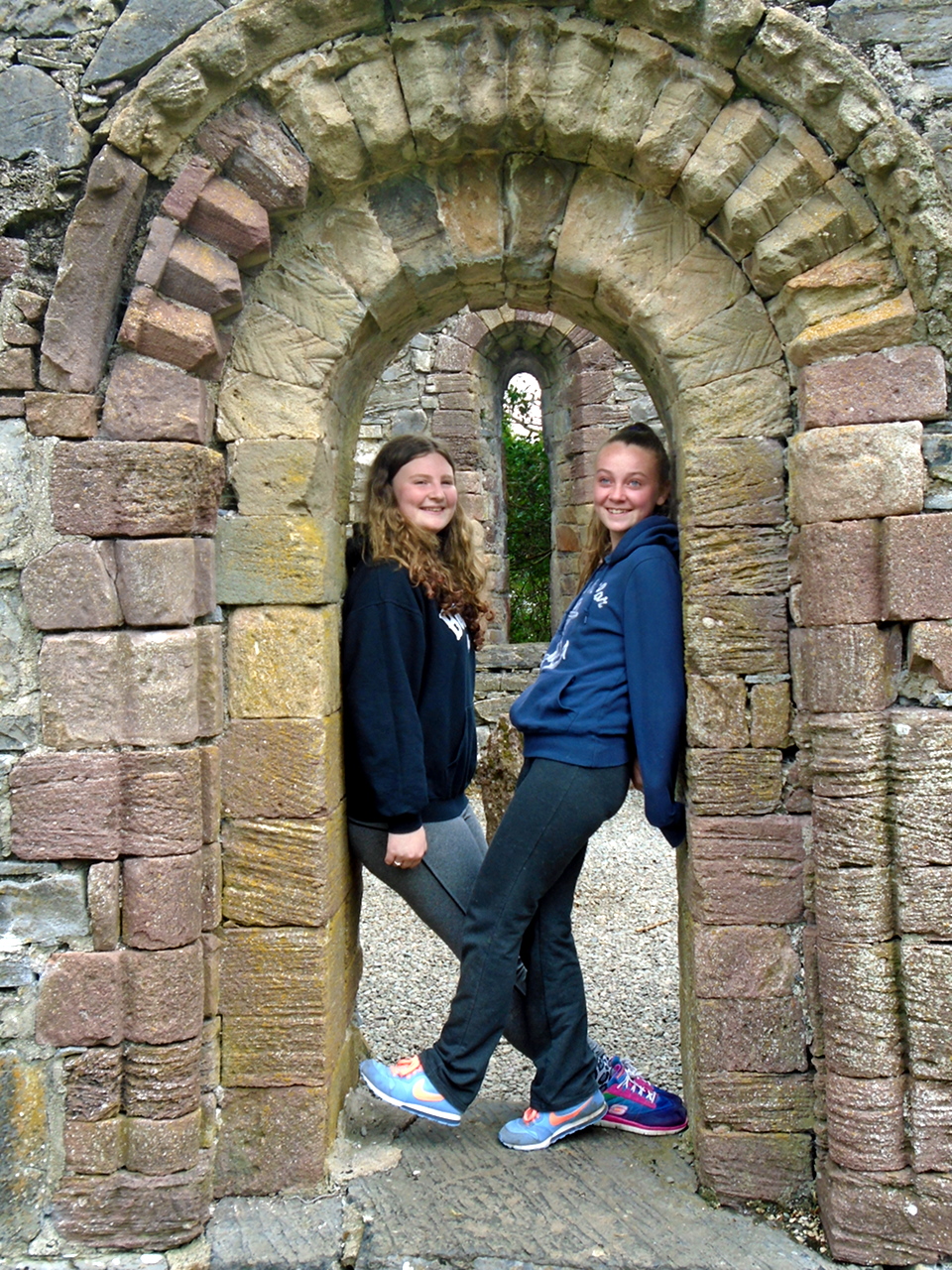
The suggestion that we row across the lake to Innisfallen Island was enthusiastically received by 14 year old grand-daughter Nessa and her 15 year old friend Lauren. 

The forecast for last Saturday afternoon promised that the second half of the day would be much better than the first. So we set off from the 14th century Ross Castle.

DSC00795

The castle was originally a Norman-style tower house, the home of the O’Donoghue chieftains.

It is said that the lake we were rowing across was the result of a flooding caused when the chieftain in a drunken state insisted that the cover be left off a local well.

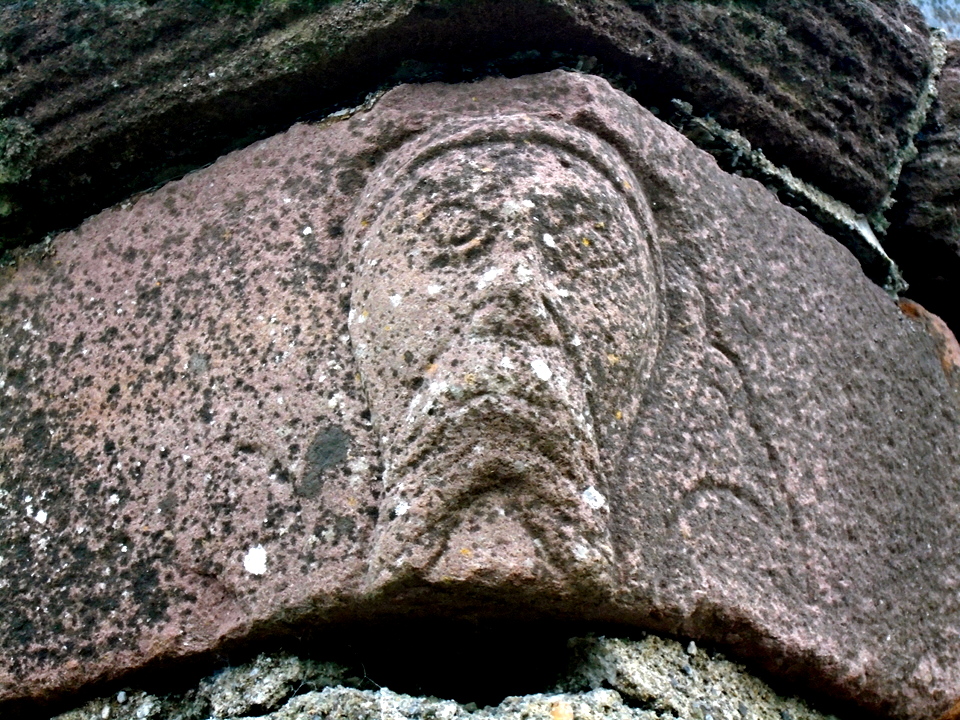
The tale is also told of another O’Donoghue who, not wishing to grow old, agreed to an ancient magic that required his being carved up into little pieces and returning as a baby. Unfortunately his wife arrived in the middle of the exercise and her shrieks broke the magic and as a result parts of O’Donoghue and his household furniture are to be found frozen in rock form in various parts of the lake.

In 1652 a combined force of native Irish and royalist ascendancy defended the castle against the Cromwellian army. It is said when the castle was blockaded from the lake the garrison surrendered without firing a shot.

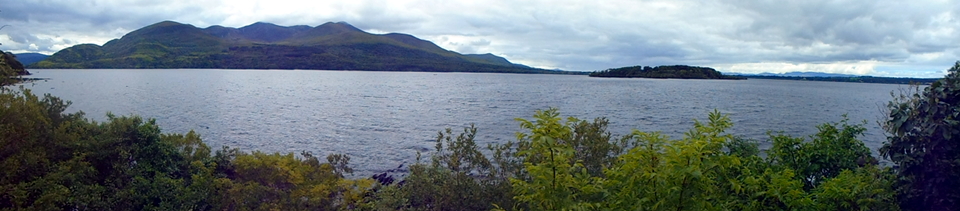
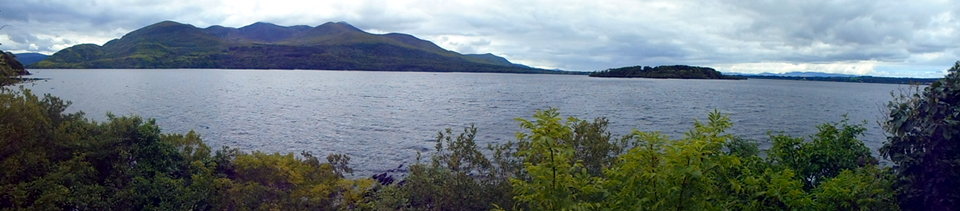
Ross Bay was flat calm as we started our trip over the lake. Just as well. I had not done any rowing for several years.

We rowed between O’Donoghue’s Prison – where it is said one of the chieftains was chained to the rock for a time – and Mouse Island – said to be named after Mickey Mouse to mark a trip on the lake by Walt Disney.

It is said that the first monastic community on Innisfallen tended a leper colony in the sixth century. Then for many hundreds of years it was a great centre of learning with students coming here from all over Europe.

As well the Annals of Innisfallen were partly written here. This is the oldest contemporary record of the history of Munster. The original is now in the Bodlian Library in Oxford.

DSC00802

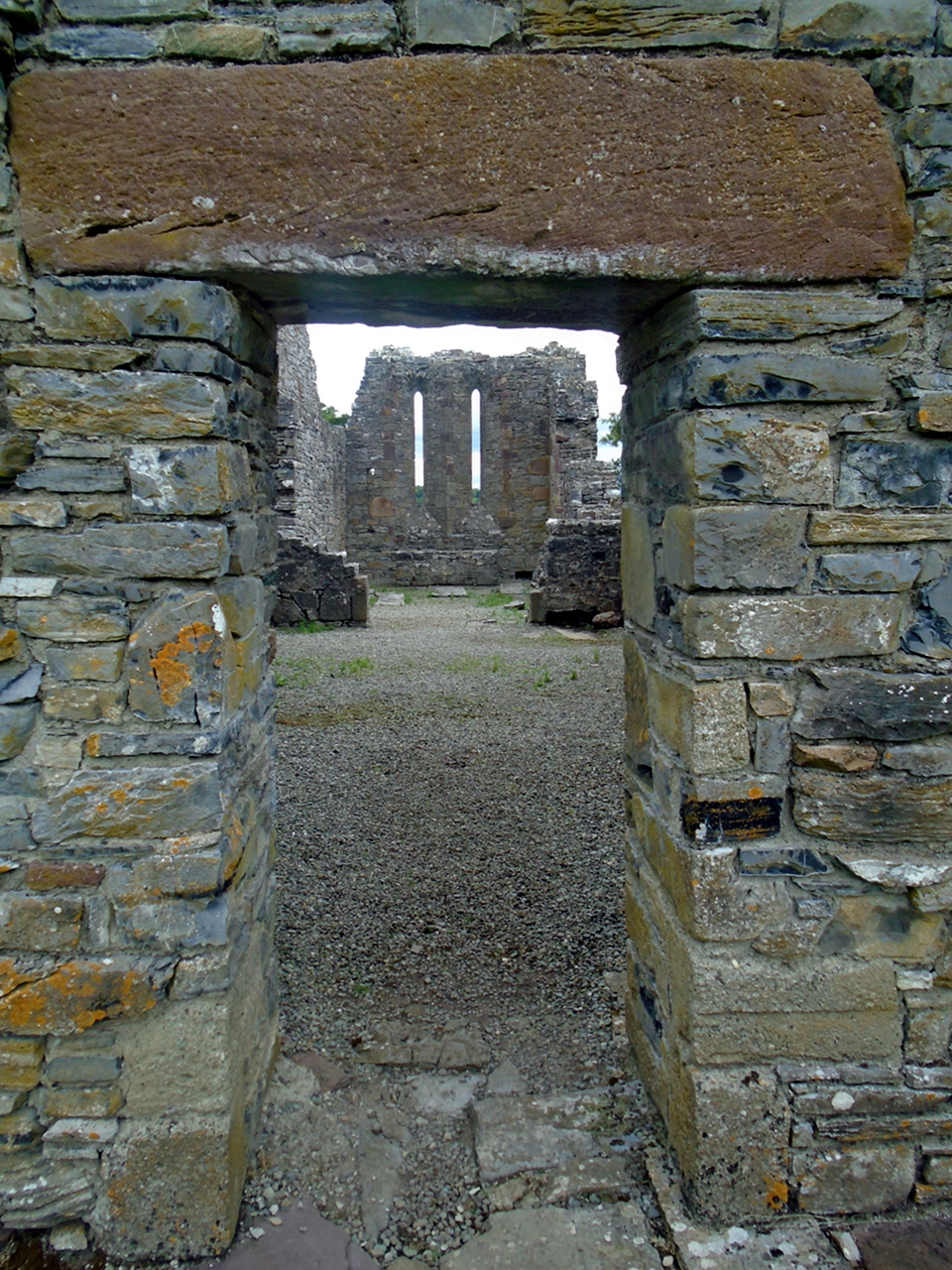
Presumably the early buildings on the island were made of wood. To-day’s extensive stone remains date from the 12th century.

DSC00816

DSC00818

The walk around the perimeter of the island was a favourite 19th century recreation. The girls were delighted that we left the picnic basket in a secluded part of the monastery.

DSC00814

And so through groves of fine beech trees, large oak, holly and ash with endlessly varying views of mountain and lake. Along the way we passed Leaba Diarmada where it is said that mythical Diarmuid and Grainne rested when they were being pursued by an aging Finn Mac Cumhaill irked that his promised young bride had run off with another.

DSC00822

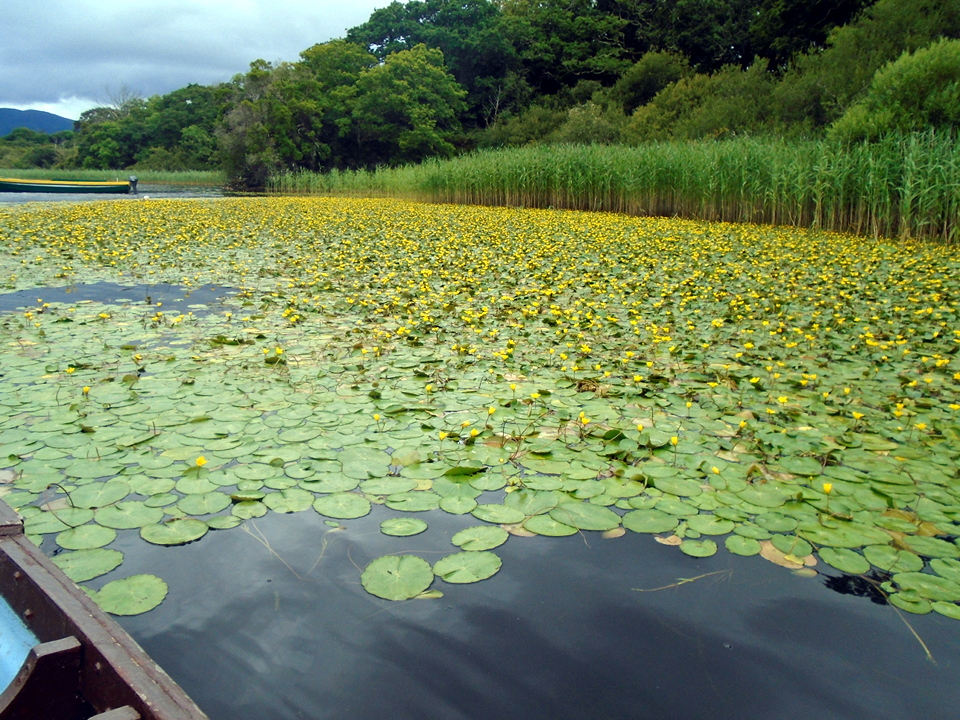
After a quick picnic on the northern shore the lake was a little choppier. On the way back Nessa tried her hand at rowing. We inspected an extensive growth of yellow lily.

(The three hour hire of the row boat cost €40)

Frank Lewis

Gallan Eile is only five miles from Ross. As well as our boat trip … which can be much more extensive taking in the fabled O’Sullivans Cascade … and even a trip to the two other main lakes … as well Ross Island (joined by bridge to the main land) offers extensive nature, landscape, history and legend.

For more information or to book a stay at Gallan Eile …

 Book Here


A UNIQUE RAIN FOREST TREE FERN GARDEN

– populated by dinosaurs, crocodiles & giant ants

palms and tree sculpt DSC00770

The panorama from the N70 beyond the Mountain Stage on the Ring of Kerry route – extends from the east at Loch na dTrí gCaol/the Lake of the Three Narrows – the promontory spits of sandy beach of Inch, Rossbeigh and Cromane – the whole expanse of Dingle Bay, with the backdrop mountain spine that runs the length of the Dingle Peninsula to the Blasket Islands off the peninsula’s western tip.

The landscape is bare, rugged, almost harsh. Until you get to the semi-tropical micro climate at Kells Bay Gardens, made possible by the shelter provided by Cnoc a’ dTobar (Knockadobar/the mountain of the well).

We had arranged to arrive just at high tide at 12.38 on Thursday afternoon last. A quick dip from the sandy Kells cove was my first sea swim of 2016. It was refreshing!

waterfallDSC00789

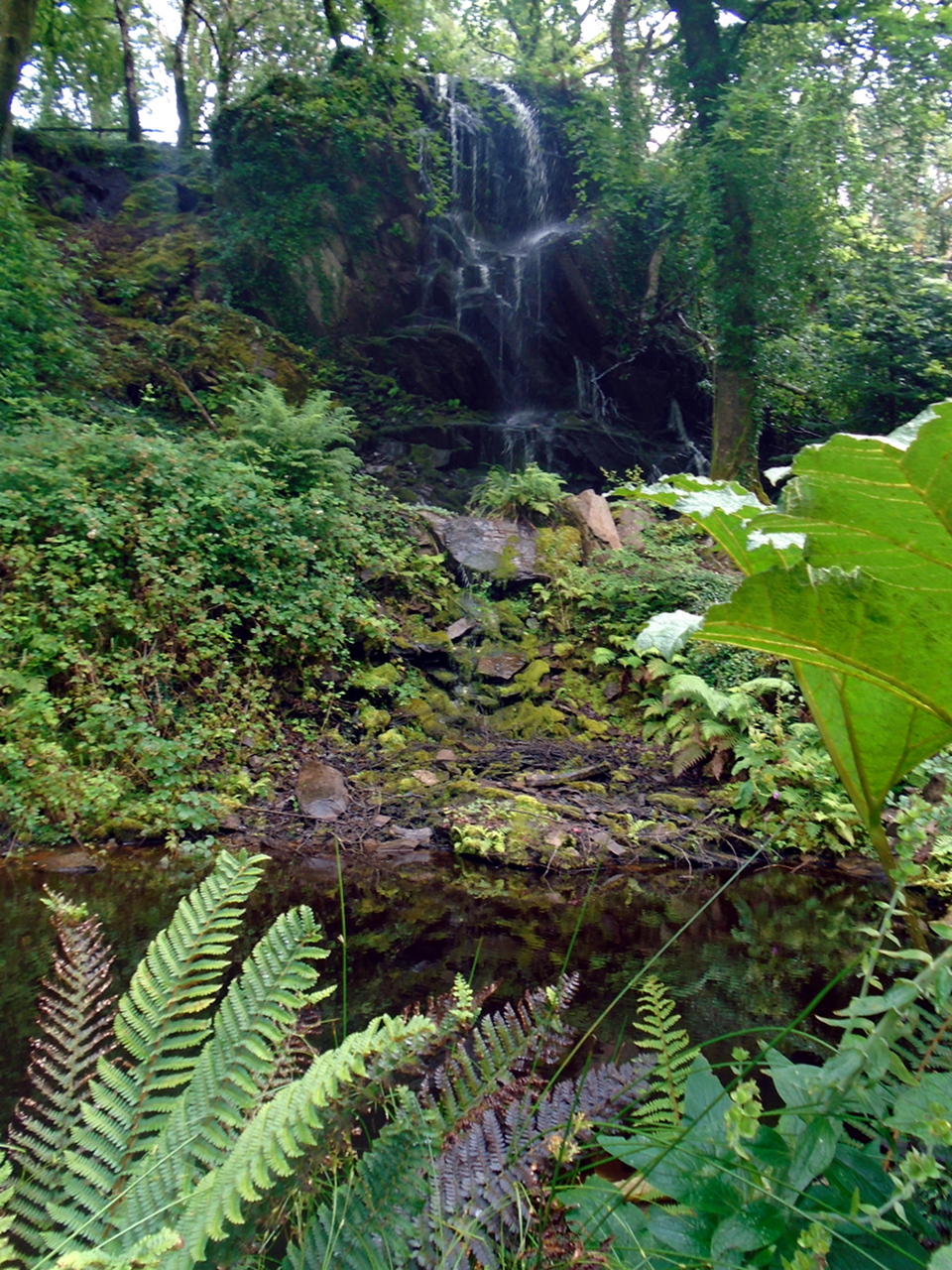
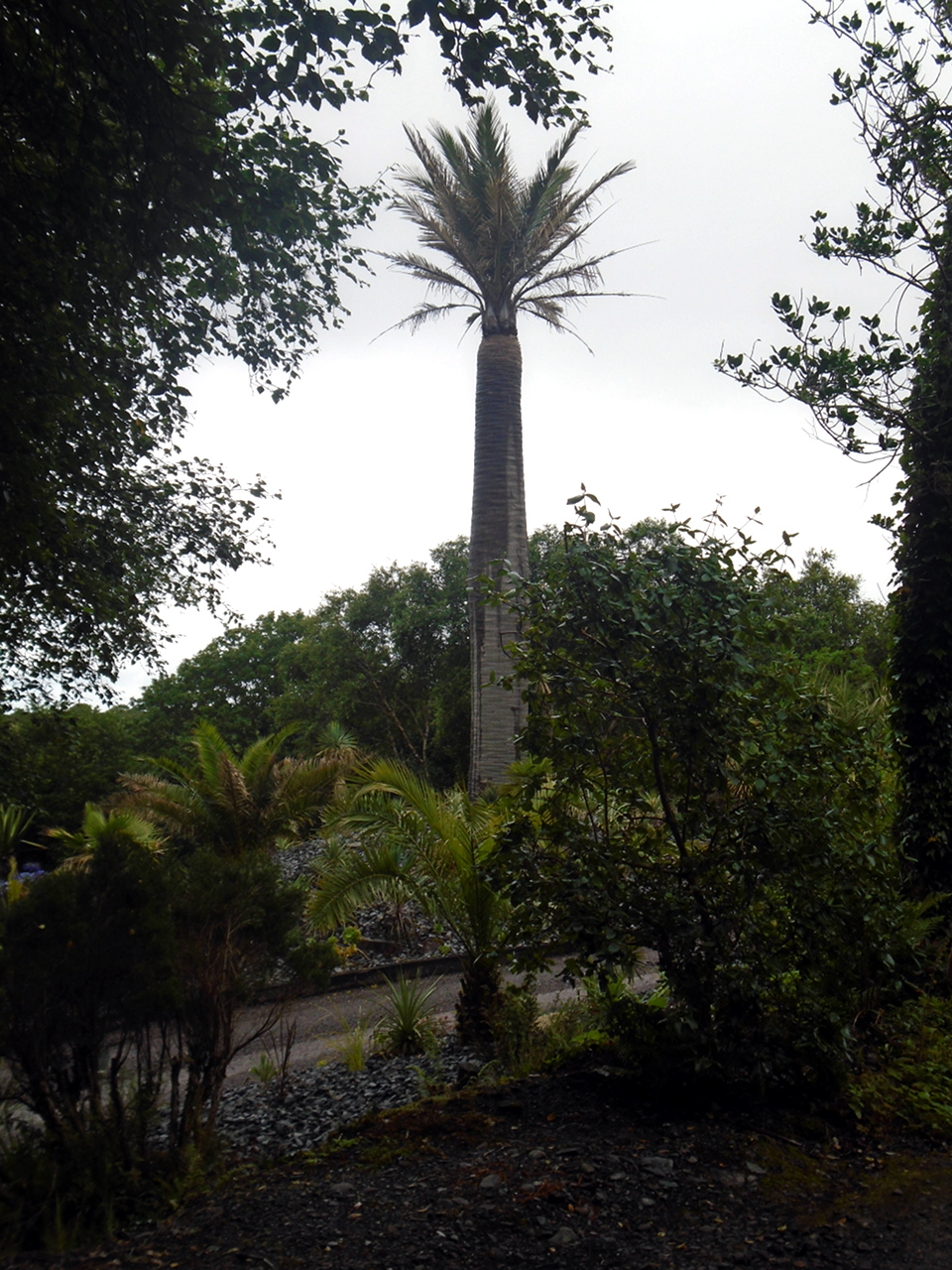
Driving through the garden gate, a waterfall on the right, surrounded by lush rain forest-like vegetation. The car park is dominated by a 7.5 meter high Chilean Palm Tree, the tallest in Ireland. It weighed 11 tons when it was imported in 2007.

high palmDSC00788

Hundreds of tons of local rock was used to replace the native peaty soil that covered this outcrop with the Chilean Palm to allow the introduction of a collection of rare plants – including many palm trees – from rugged landscapes.

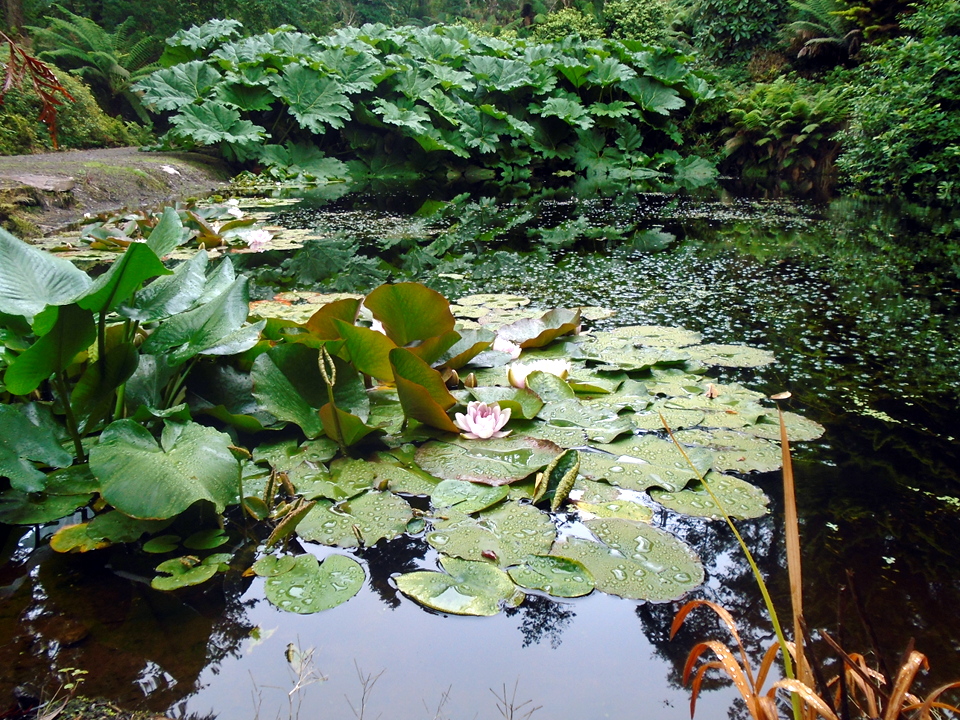
lily padsDSC00772
 DSC00775

Wandering around the green and red looped walks – with white spur routes – has the feel of being in a much larger area than the 17 hectare/40 acre Kells Bay Gardens.

The seamless integration of native flora with groves of a variety of southern hemisphere tree ferns is the unique hallmark. Tree ferns from Australia and New Zealand as well as South America.

 You need to be prepared to spend a couple of hours to get full value for the €6.50 admission charge (€5 for children under 17, 20 for a family of two adults and two children under 17).

fern and sculptureDSC00782
ferns and tree sculptureDSC00780
ant sculptureDSC00779
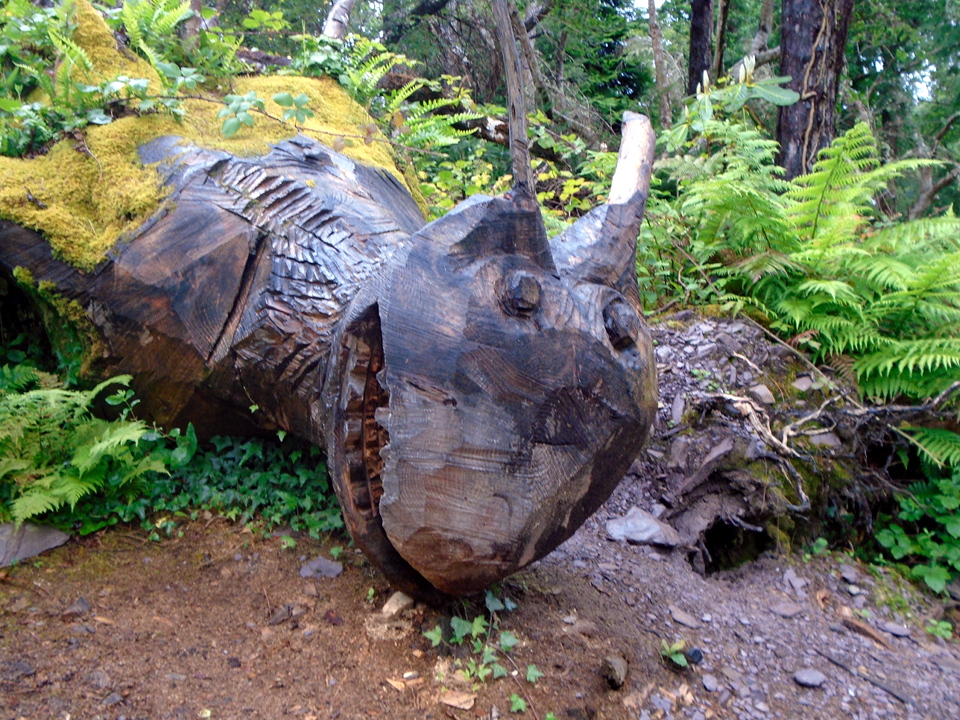
The tree ferns go back to the primeval forests. Sculptor Pieter Koning has carved an intriguing series of huge animals of that find of forest .. dinosaurs – of land and air – crocodiles, giant ants. These are all carved from trees blown down in the great storm of February 2011. The trees were carved where they fell, in one or more cases the carved trunks are the bottom half of a tree left standing.
Frank Lewis

Kells is about an hour and a half drive from Gallan Eile, our self-catering rental accommodation – for more information or to book a stay at Gallan Eile …

 Book Here

Nature Notebook


WHERE THE QUIET MAN WALKED

– fuchsia, montbretia & ‘An Ode to a Cow Dung’

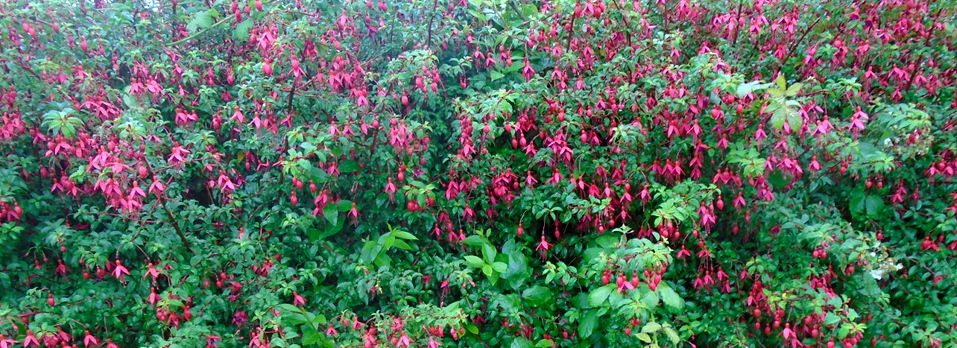
Have you ever seen anything like the fuchsia this year? Hedgerows on Knockanore Hill are laden down with the red and purple flower.

DSC00758fuchsia

The house and flower-filled garden of the Hannon family in Laherrough is surrounded by a carefully tended fuchsia hedge. “We need to trim it every three weeks during the growing season”, Ann Hannon said the hedge had been planted by her father in the 1930s when fuchsia was first introduced to Knockanore by their neighbour David Kissane.

DSC00756 fuchsia close up

Which of its folk names most effectively expresses the flower? Dancing Lady aptly suggesting the colouful, happy exuberance of a young ballet dancer. Or the Irish name of Deora Dé (the tears of God) perhaps bringing to mind a rich waterfall of grief.

Fuchsia was first introduced to this part of the world from Chile less that 200 years ago. It is said that it was brought to Ireland by Cornish copper miners when they came to work in Allihies on the tip of the Beara Peninsula.

DSC00762 well

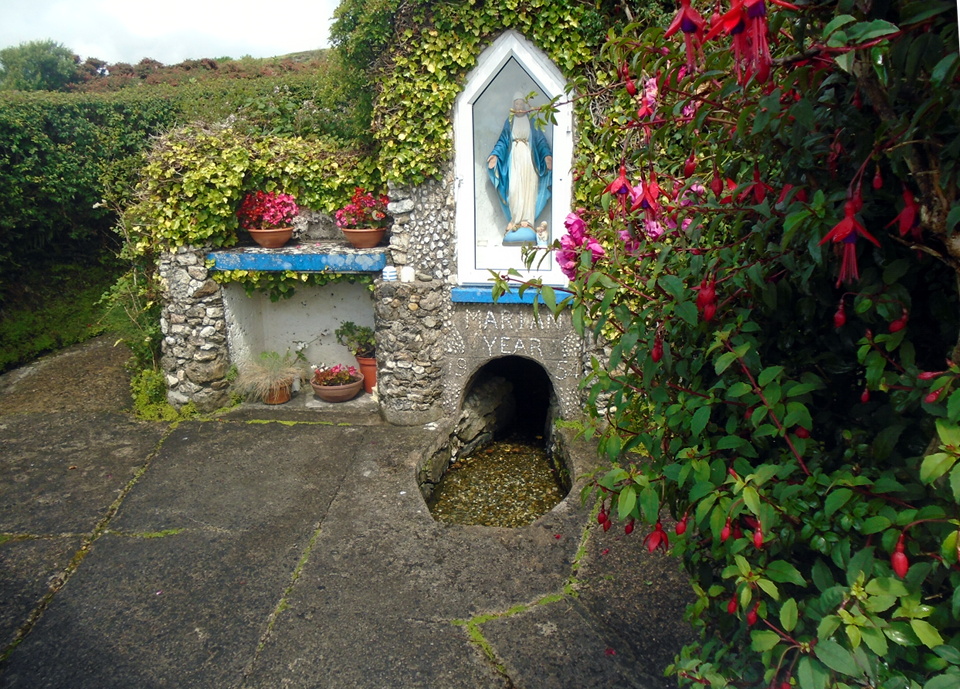
The Hannon farm is at the end of a cul de sac. It is also well worth visiting to see the Tobar mo Chroi/the Well of my Heart holy well, whose water is said to be good for treating sore eyes. The centre piece of a statue of Our Lady in a glass cabinet and the clear water of the well is surrounded by a fuchsia hedge.  While the Saturdays before May 1st and June 24 (St John’s Day) are the well’s special days Ann Hannon assures “we welcome visitors to the well at any time.”

….

On long lengths on the sides of many ditches in Knockanore the orange coloured montbretia is at present bursting into blossom. This is a cross between two South African garden plants. It has acclimatised well since it was introduced here in the 1870s.

But be warned! In case you are tempted to dig out a clump of montbretia it can very quickly take over your garden and it is almost impossible to get rid off.

….

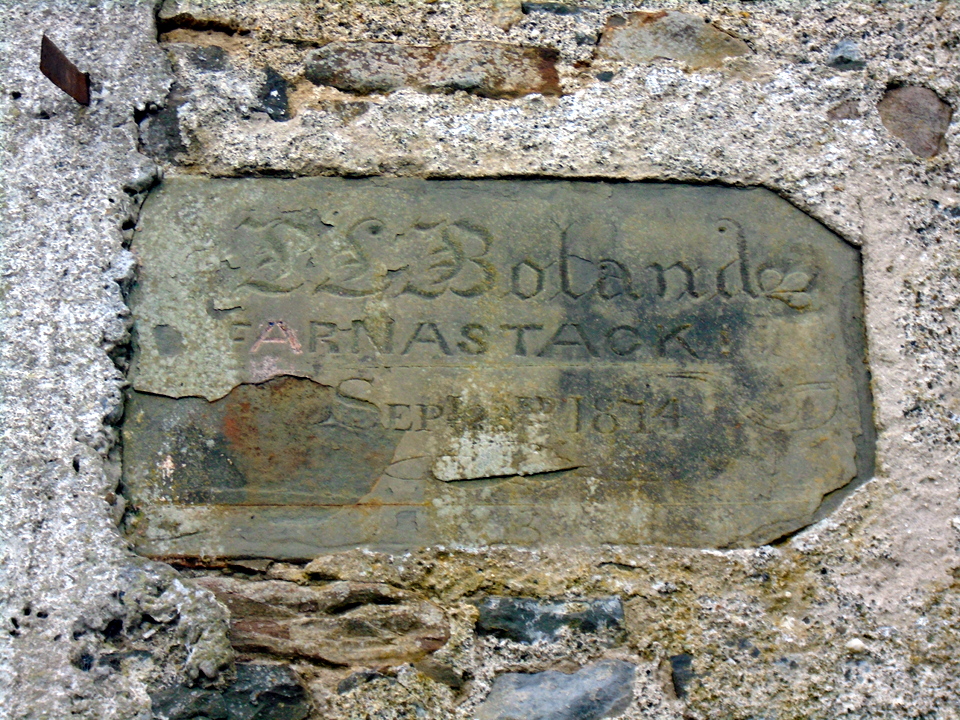
The site of the home of the original Quiet Man is on Barra Road on Knockanore and if you are lucky – as we were last Sunday – you might bump into his son Tom Bawn Enright or his daughter Noreen. You might visit the first indoor dancehall in north Kerry, the home of Robert Leslie Boland whose verses included such earthy themes as ‘Ode to a Cow Dung’.

DSC00754

DSC00753graveyard

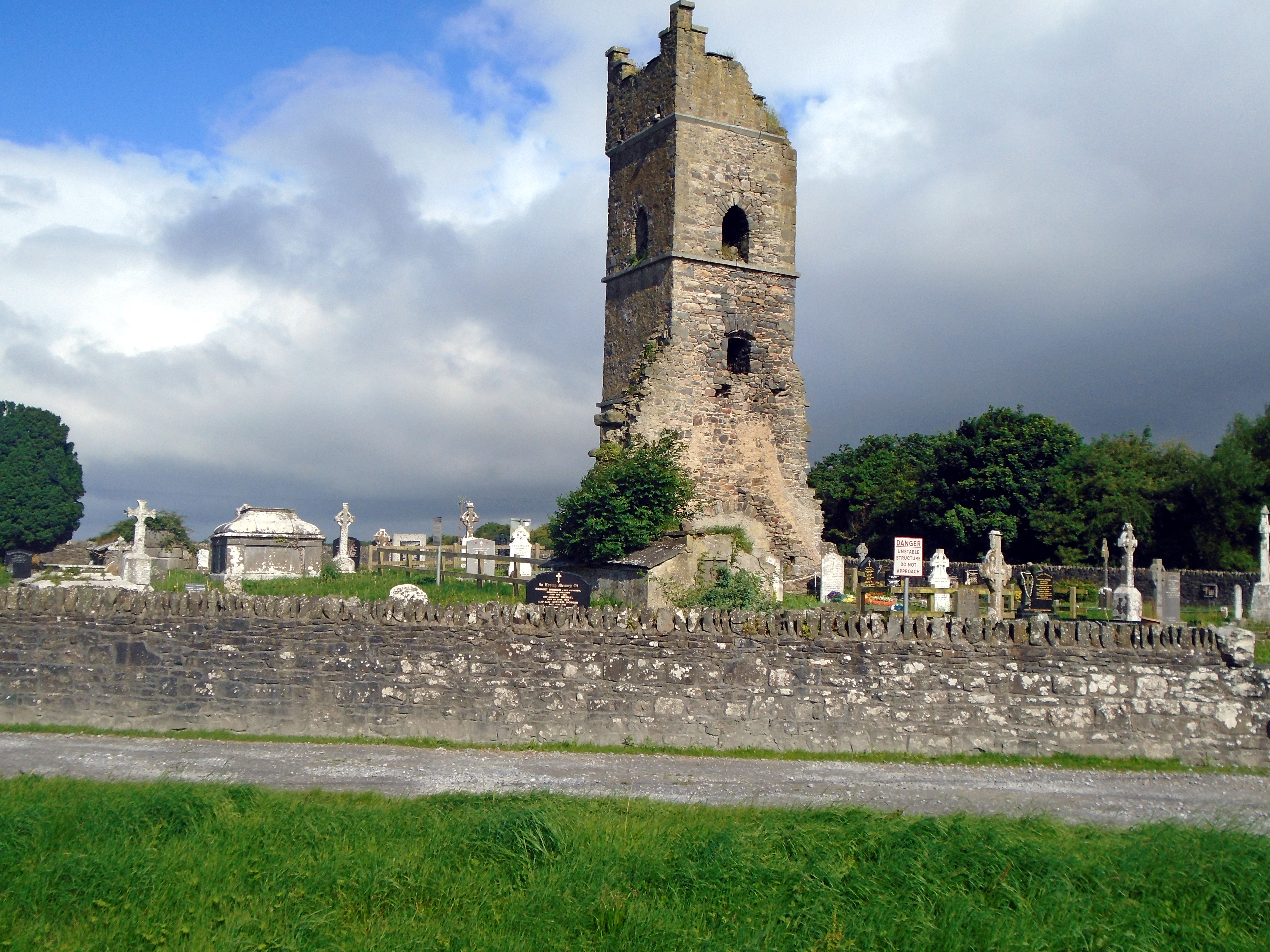
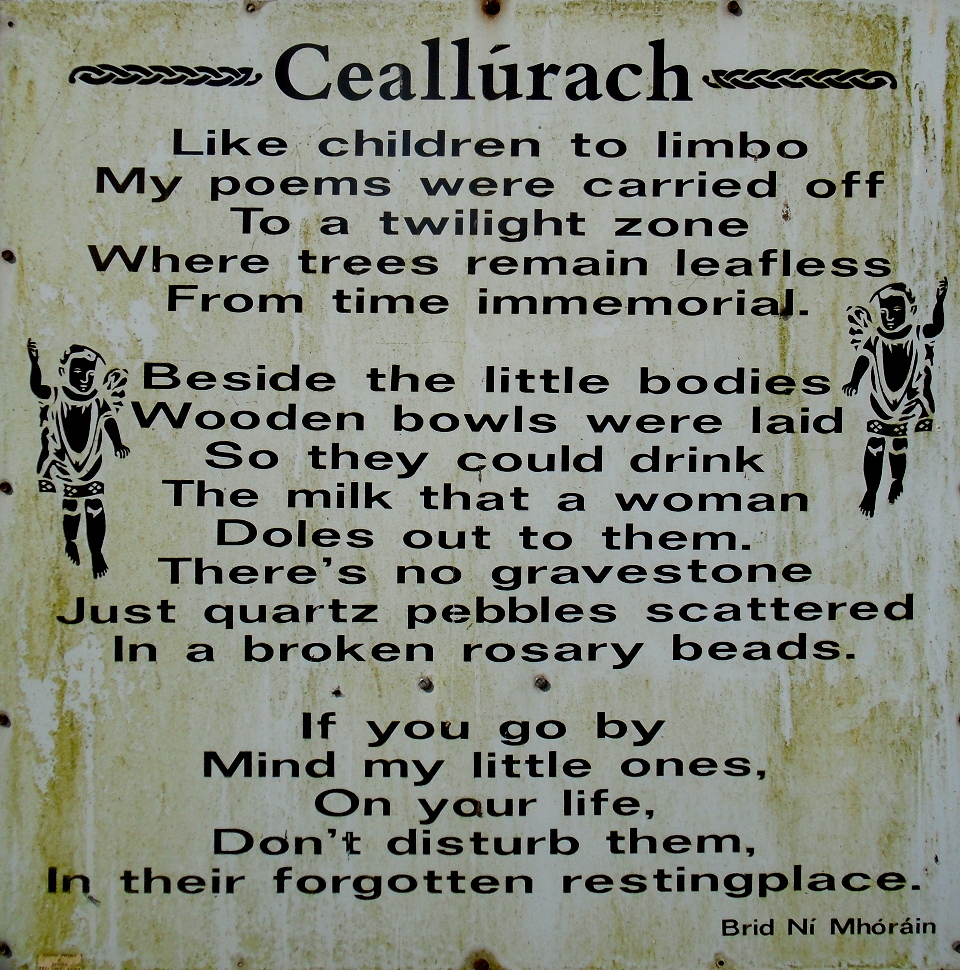
We started our six hour trek of Knockanore at the Lisselton graveyard to search out a story of the great generosity in famine times of Mary Collins Foley … visit the Cilin outside the walls where unbaptised children were buried. The church would not allow them to be buried in consecrated ground.

DSC00751poem Killeen

DSC00763

We finished on top of Knockanore with its unparaelled view of the Shannon Estuary, all of the coast and plain of north Kerry with it’s backdrop of mountains from the Cork/Kerry border to Brandon at the end of the Dingle Peninsula, as well looking north to the Cliffs of Moher and the Aran Islands.

Frank Lewis

PS Hear the full story of our drive and walk on Knockanore on Radio Kerry this Saturday morning (July 30) from 9 to 11 or from next Tuesday or Wednesday on podcast (www.radiokerry.ie)

PPS Knockanore is about an hour’s drive from Gallan Eile, our self-catering rental accommodation – for more information or to book a stay Gallan Eile …

 Book Here

The Blue Pool/Cloghereen Woods Nature Trails

A STAG IN THE GARDEN .. RAIN FOREST .. AND SPIDERS’ WEBS


DSC00685deer

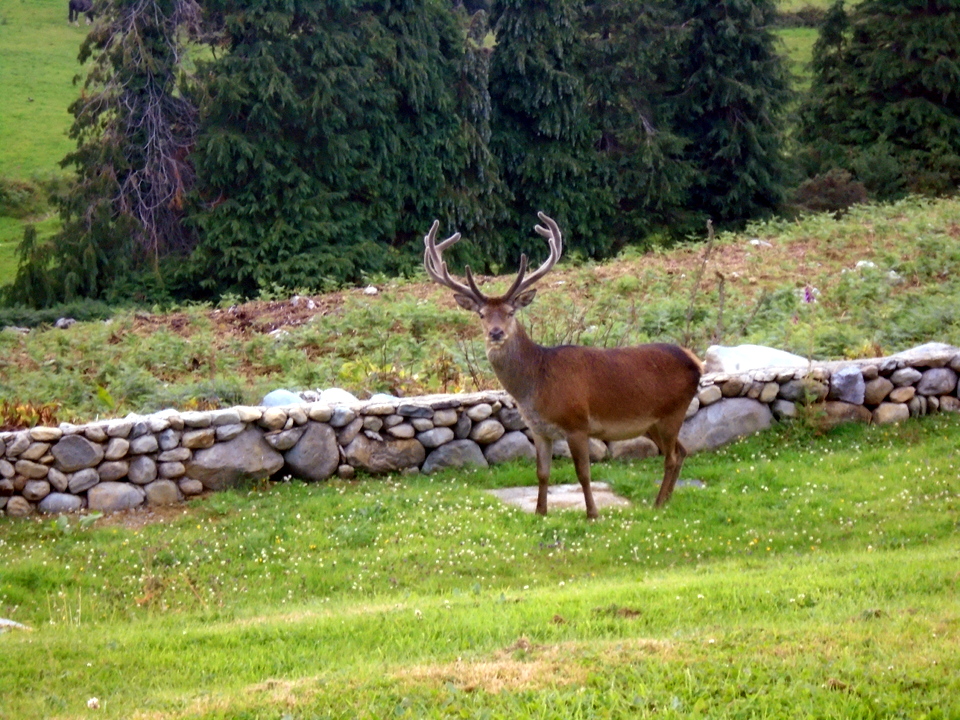
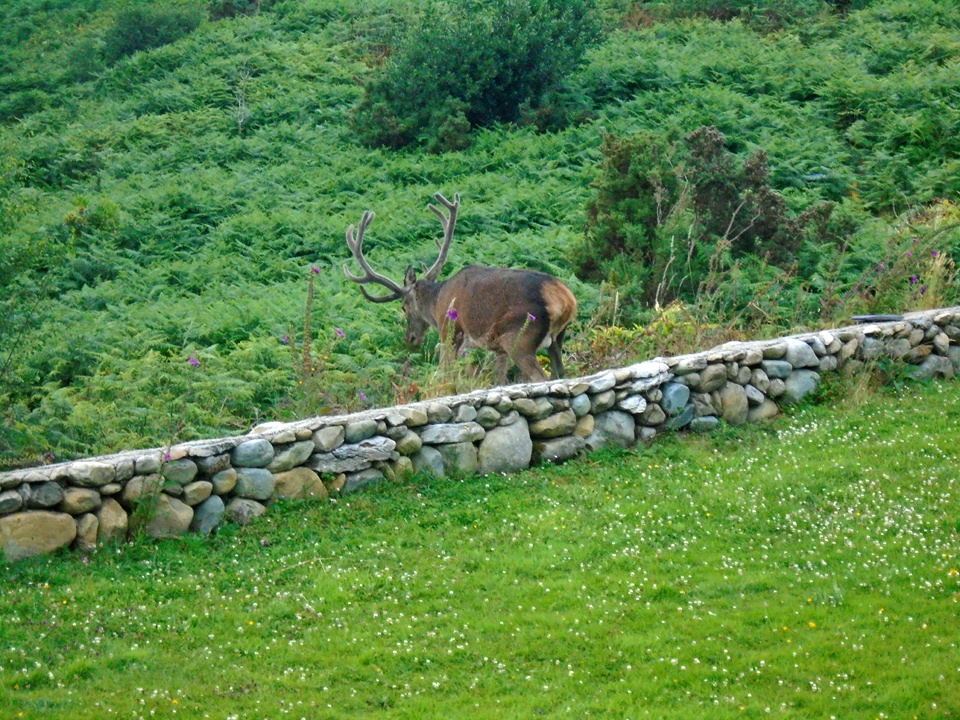
The red stag stared at me from the bottom of our garden. He didn’t move until I inched a little closer. Then he stepped over our four foot high pre-famine ditch, as if it wasn’t there, and ambled away through the fern-covered field in front. A familiar sight for anybody living more than three miles from Killarney town. That was last Saturday evening.

DSC00687deersass

The wild and wet did not look inviting last Sunday. I had done very little walking during the week and needed to get out. Sarah wanted to be with cousin Nessa. But my eternally willing companions – our dog Billie and Colm’s Comeoutcha and Pooka – walked with me down the road and into the Blue Pool/Cloghereen Woods nature trails.

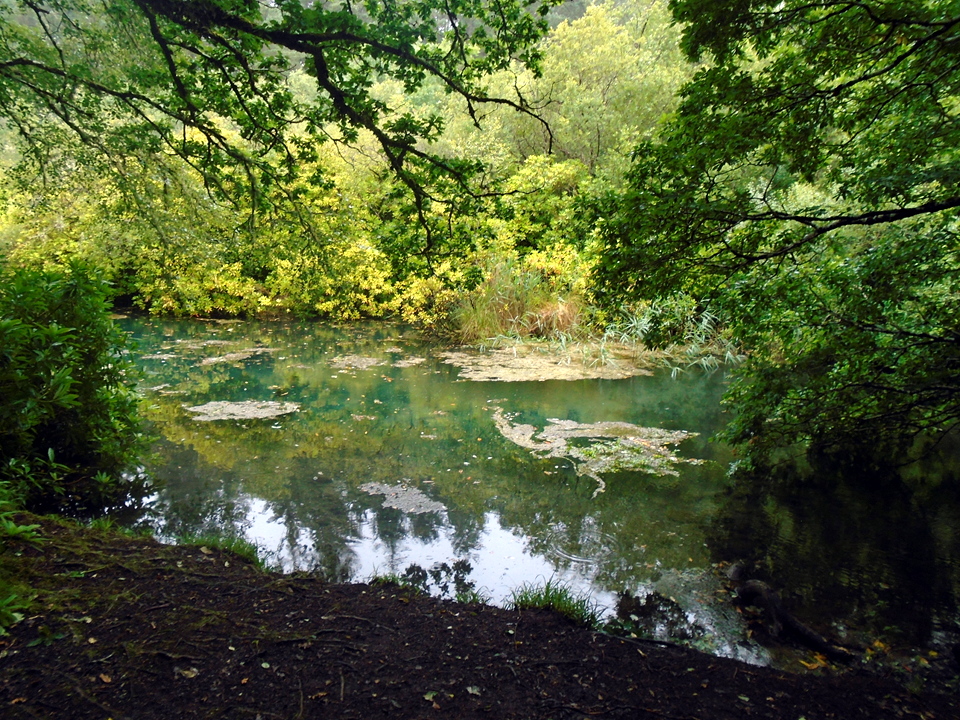
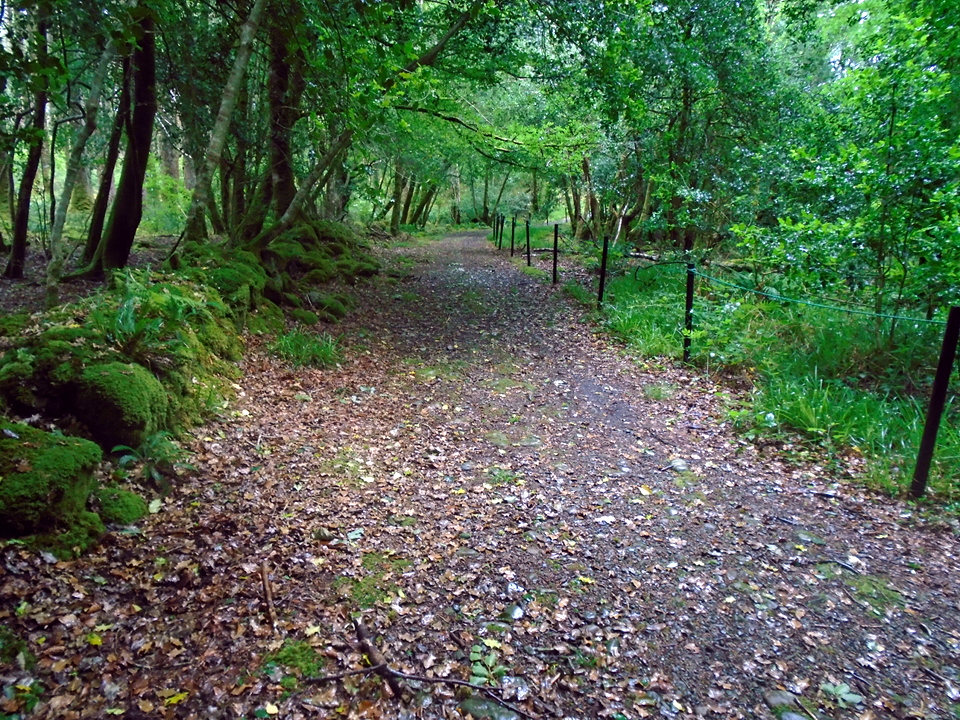
I was sheltered from wind and rain by the trees. In the wild it is always worth exploring a track worn by others. Through ferns and under high conifers. When I got back to the marked route I went down on to the banks of the Blue Pool. The water is a greeny blue probably coloured by copper deposits.

DSC00688river

It wasn’t hard to imagine that the route was through rain forest. I have never walked in rain forest but the television pictures suggest it is just like this. The rich, moist growth is even more emphatic in last Sunday’s photos.

DSC00696guided path

The more central Blue Pool is on level, surfaced park road. This was developed some years ago by the Killarney Soroptomists Club as the first nature trail in Ireland for the visually impaired. Walkers are guided by the rope that runs by the side of the trail. The emphasis is on the partially sighted experiencing scents and touch.

DSC00702hole

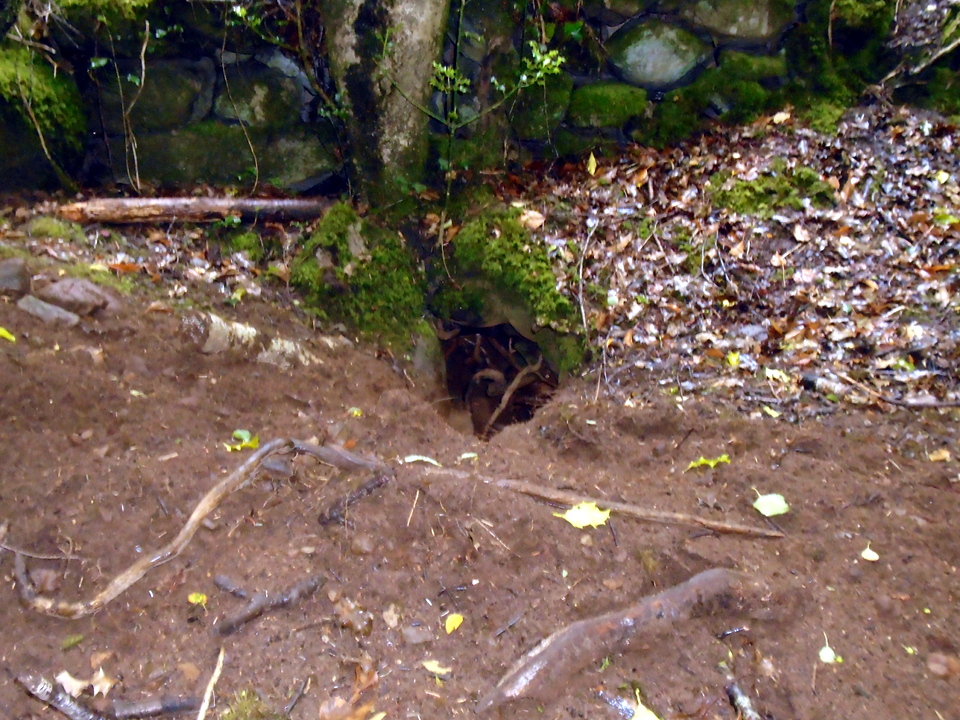
By the side of the Blue Pool there is a huge network of tunnels made by badgers. The sett has been dormant for a number of years. It has either been interfered with or has new residents. I must check at dusk some evening soon. Badgers are nocturnal so during daylight hours they are sleeping.

DSC00706seat

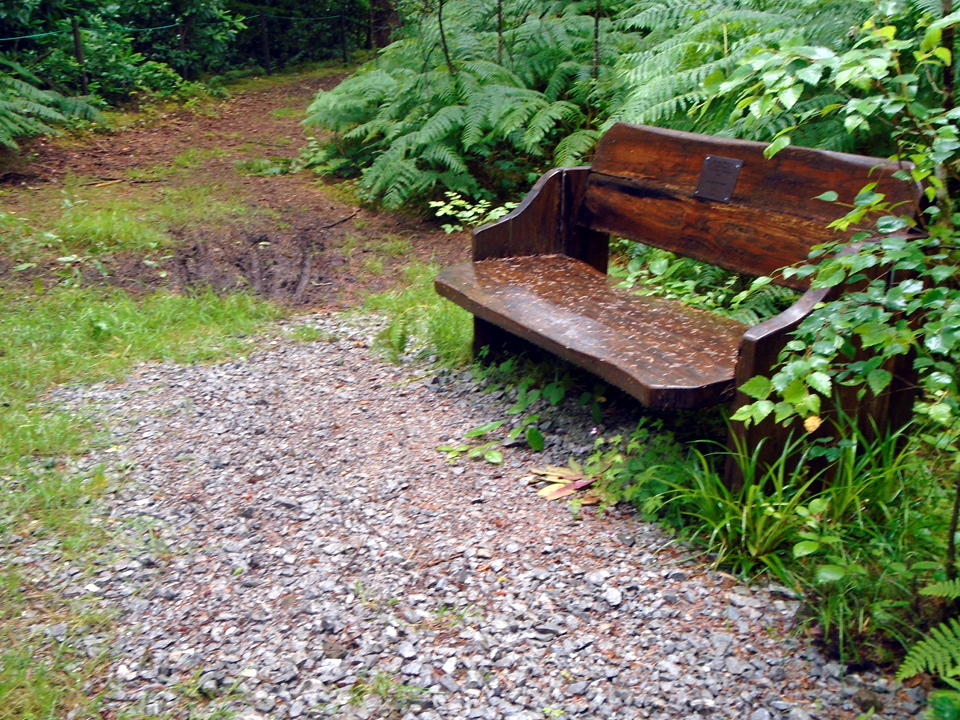
A little further on a seat marks the spot where Sean Eviston passed away. He came here regularly with his dogs.

DSC00708stream

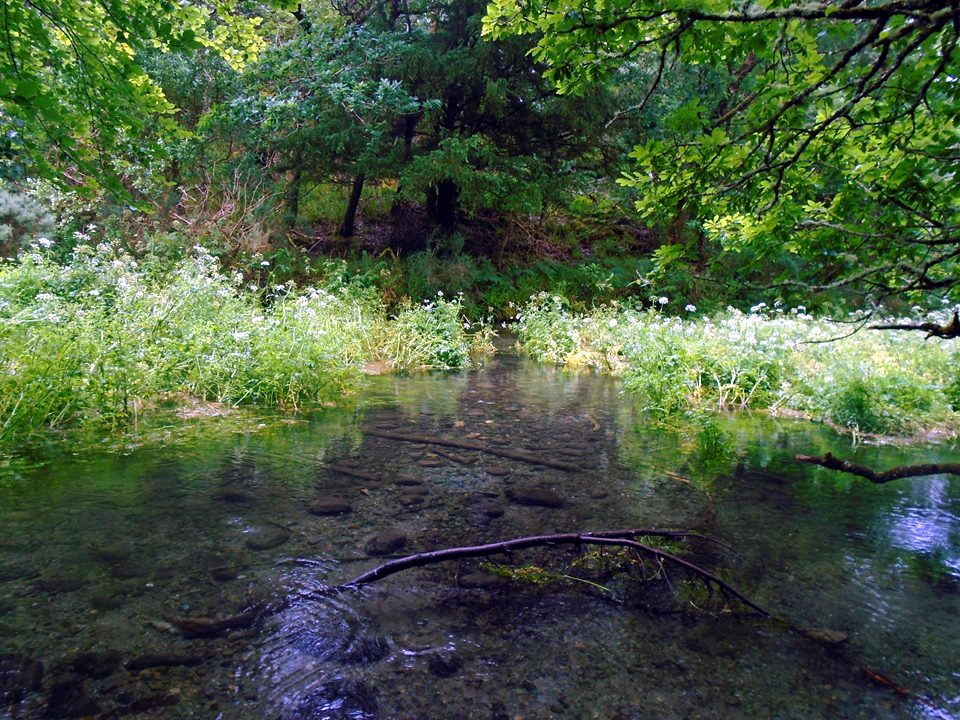
The Blue Pool water is crystal clear. I presume it is completely clean, but the rich growth of weed might suggest otherwise – but perhaps that is my lack of botanical knowledge.

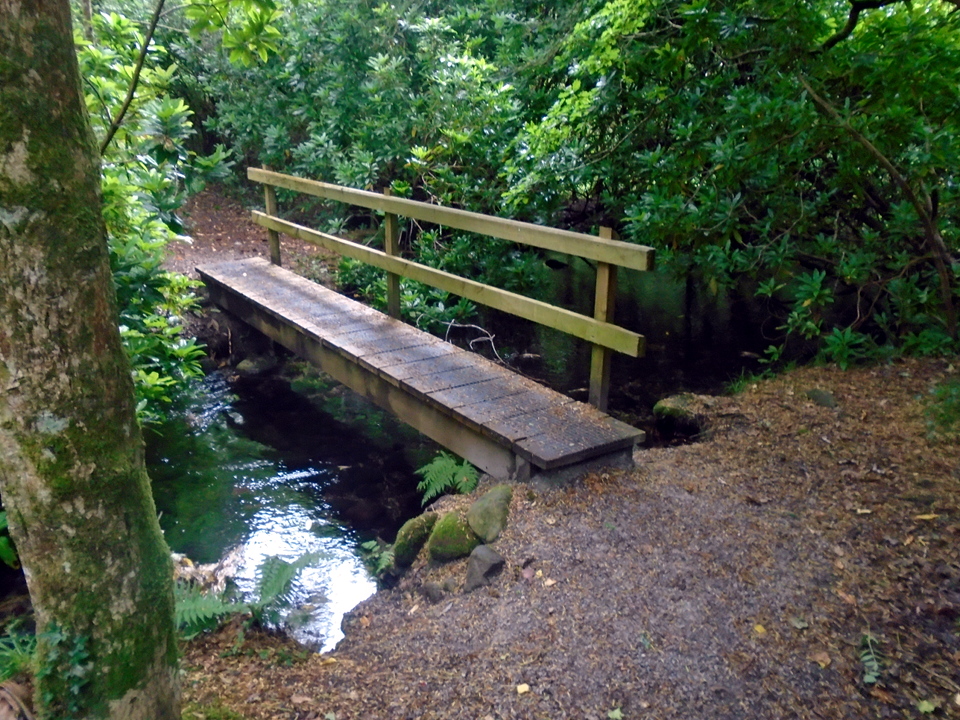
DSC00693bridge

Wherever necessary the trails have simple bridges made of planks covered by wire, so walkers won’t slip.

….

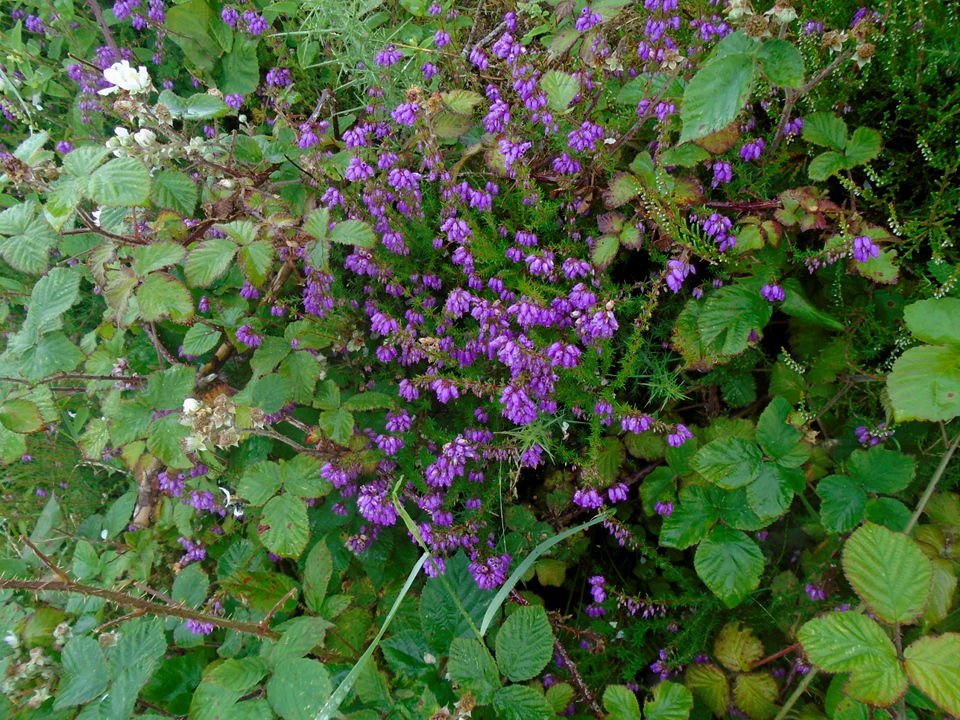
DSC00717heather and briars

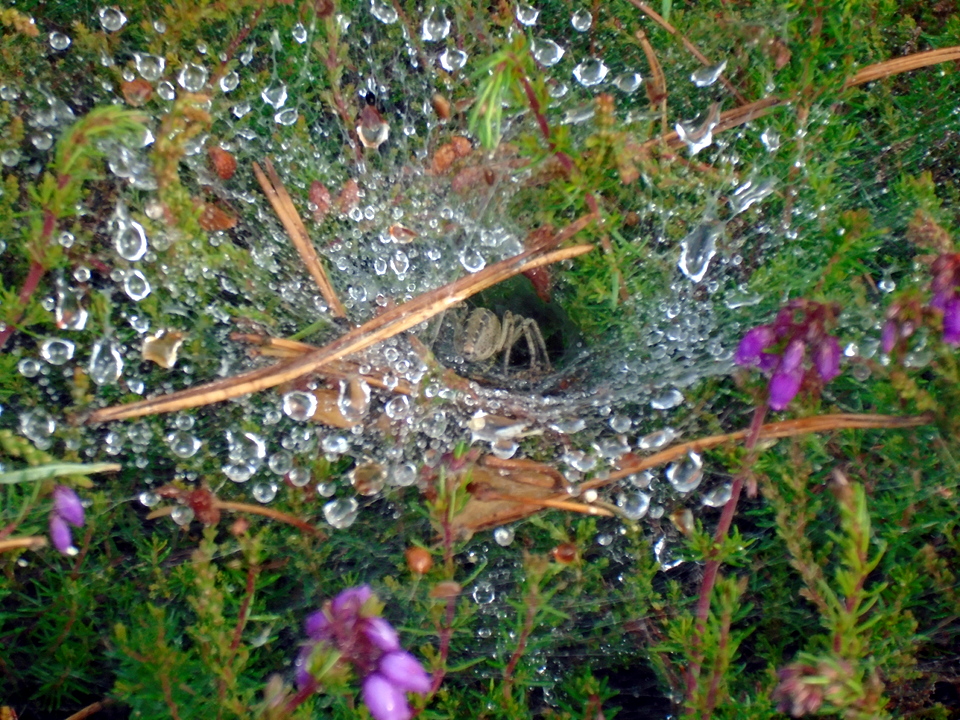
Early this morning (Tuesday July 12) a walk to the foot of the mountain emphasised that I must get back to getting out every morning. There is no better start to the day. Along the way purple bell heather and sparkling spiders web with the host sitting at the entrance to his safe-haven tunnel ready to pounce. Now, at 2.30, it is raining heavily. Another good reason to have walked in the early morning!

DSC00729spiderweb

Frank Lewis

– for more information or to book a stay at our self-catering rental accommodation Gallan Eile …

 Book Here

Mountain Panorama & Munster Football Finals


IN THE ONE VIEW MOUNTAIN PANORAMA & FOOTBALL FINALS
– and skipping to ‘Courting in the kitchen

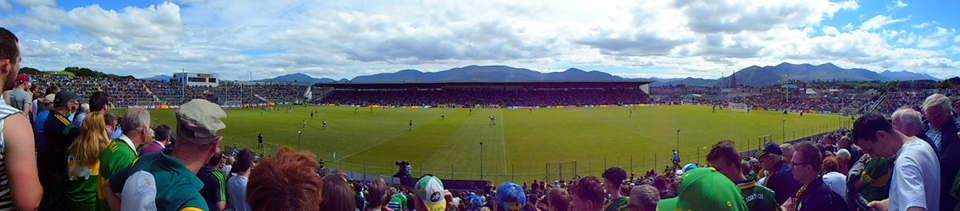
On Sunday it was possible to pick out every detail of the huge mountain panorama from the Paps, across Crohane, Mangerton, Torc and the Purple mountain ridge to three of our highest mountains Carrantuohill, Beenkeragh and Caher. In the warm sunshine the mountains were a bright blue.

DSC00682

The expectation was that the weather would just about stay fine. If we were lucky there would be little or no rain. I brought the rain gear, just in case. We were not prepared for the intense heat and brightness all afternoon. My forehead burned.

All of that and minor and senior Munster Championship gaelic football finals. We were standing on the terraces in Killarney’s Fitzgerald Stadium. It says something of the indifference of the Tipperaray supporters and the confidence of their Kerry opponents that there were only 22,000 in the 33,000 capacity stadium. We were able to sit down during the breaks. Standing for all of the four hours would have been hard.

Having Kerry dominate both games was the jam. There were flashes of excitement – especially when goals were scored – but a little more skill, especially in Kerry back lines, would have been welcome and wear and tear on some Kerry veterans did not bode well for the rest of the All Ireland Championship.

When there was a lapse in the football looking out on the mountains it was possible to imagine … The graphic shape of the Paps and the goddess of fertility after whom they are named. The turbulence of the Killarney volcanic region centred on Crohane. To see why Mangerton was named the deceiver. How many wild pigs there must have been to name a mountain and an area after them. The lake encircled Purple ridge. The precipitous spine between Carrantuohill and Beenkeragh.
….

DSC00657

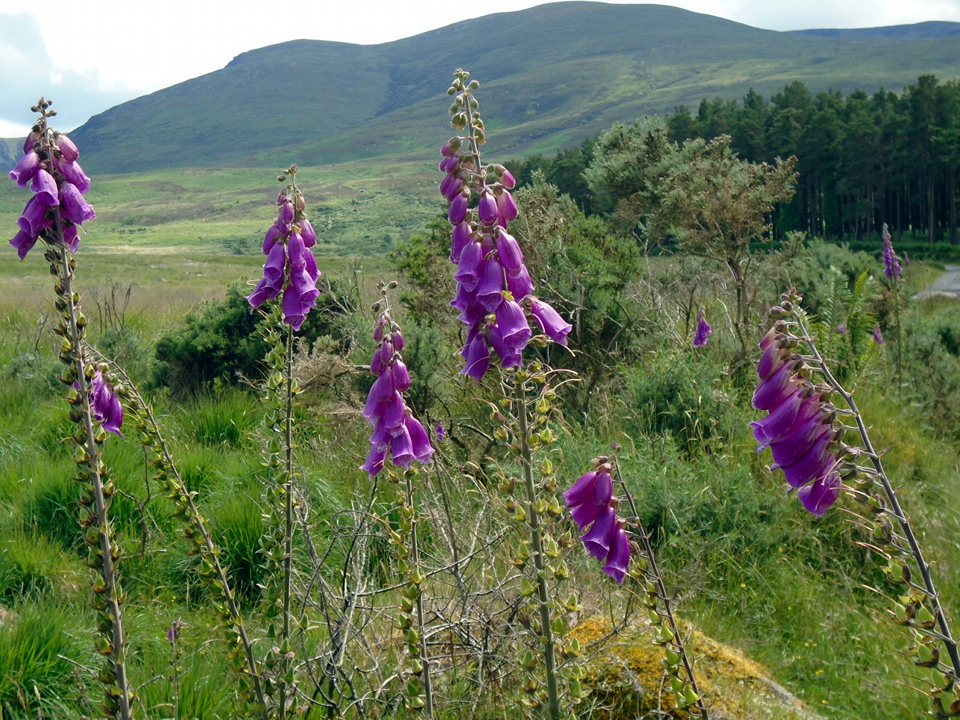
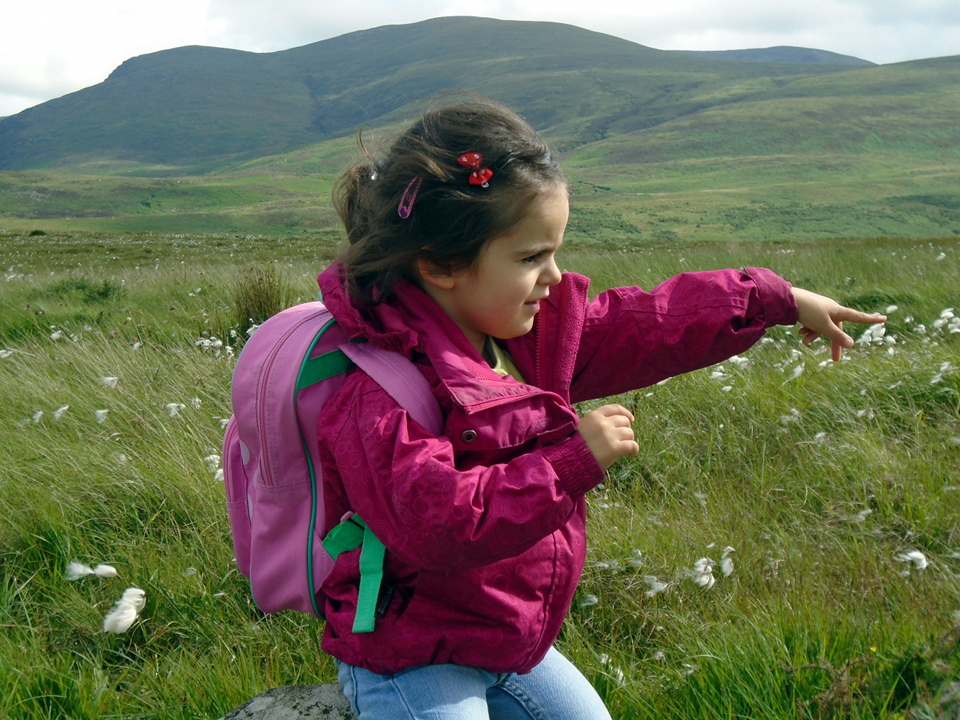
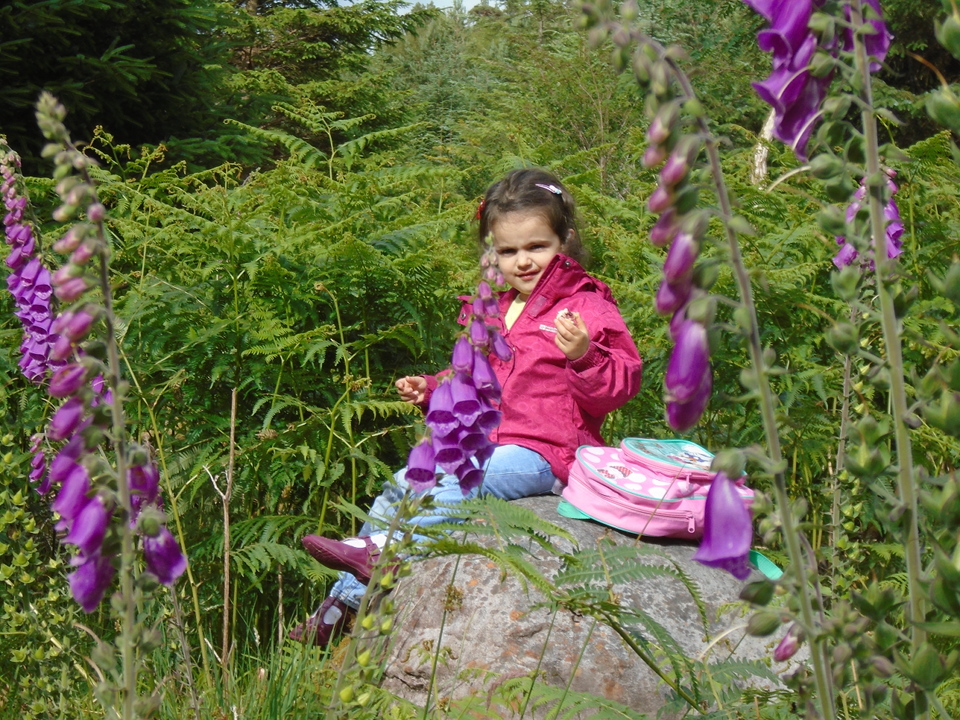
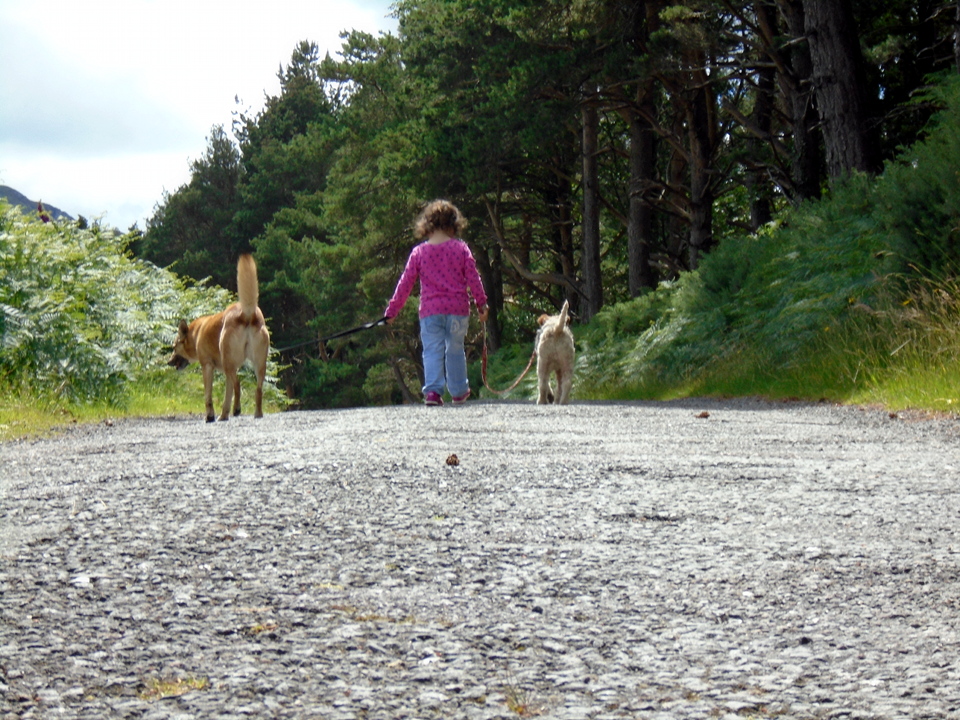
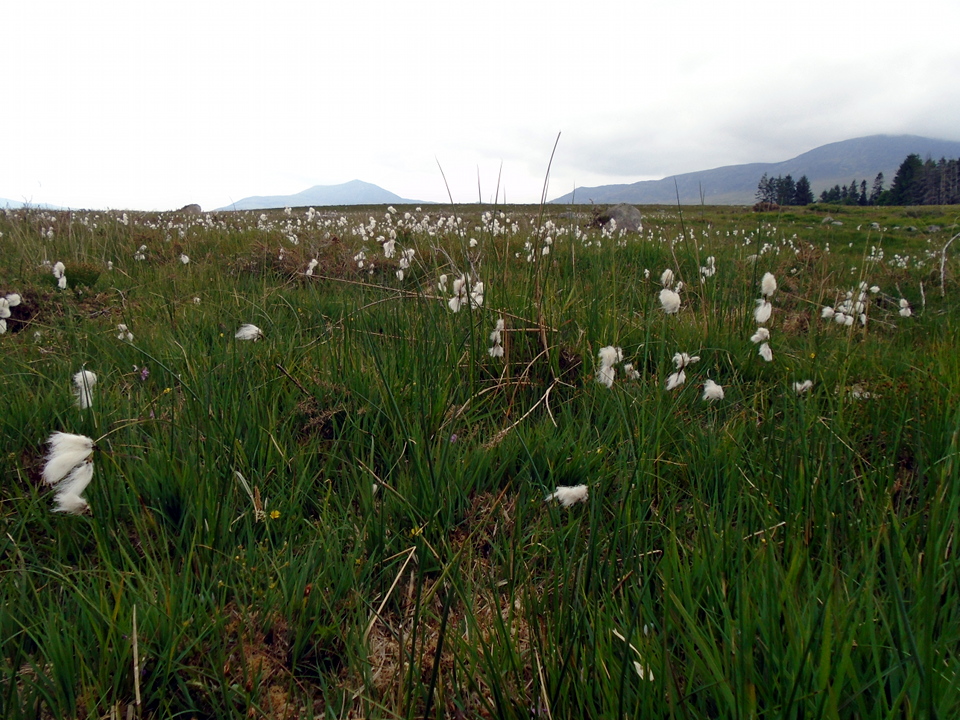
On Saturday Sarah took me for a walk. Up the road with the dogs. Over an extensive growth of bog cotton across the Mangerton commonage. Through conifer woods, along the way picnicing on the bank of a hidden pond surrounded by blooming foxgloves.

DSC00665

DSC00672

All the way singing songs. On the last stretch skipping to the rhythmic air of ‘Come listen belle and beau/and to me pay attention‘ or some such.
After three hours three and a half year old legs showed no sign of tiredness but those of a few years more were happy to rest.

DSC00654


– for more information or to book a stay at our self-catering rental accommodation Gallan Eile …

 Book Here

Mangerton Commonage

Nature Notebook

ANNE’S SECRET GARDEN
– abundant bog asphodel & heath spotted orchid … surrounded by 
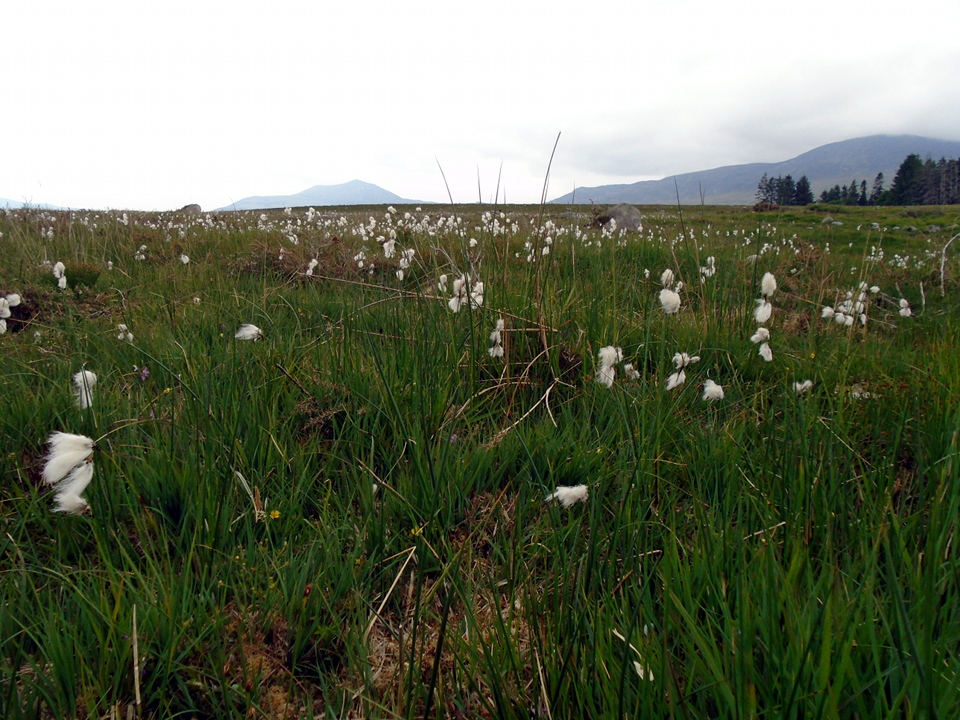
waves of bogcotton … against a backdrop of a green Mangerton Mountain

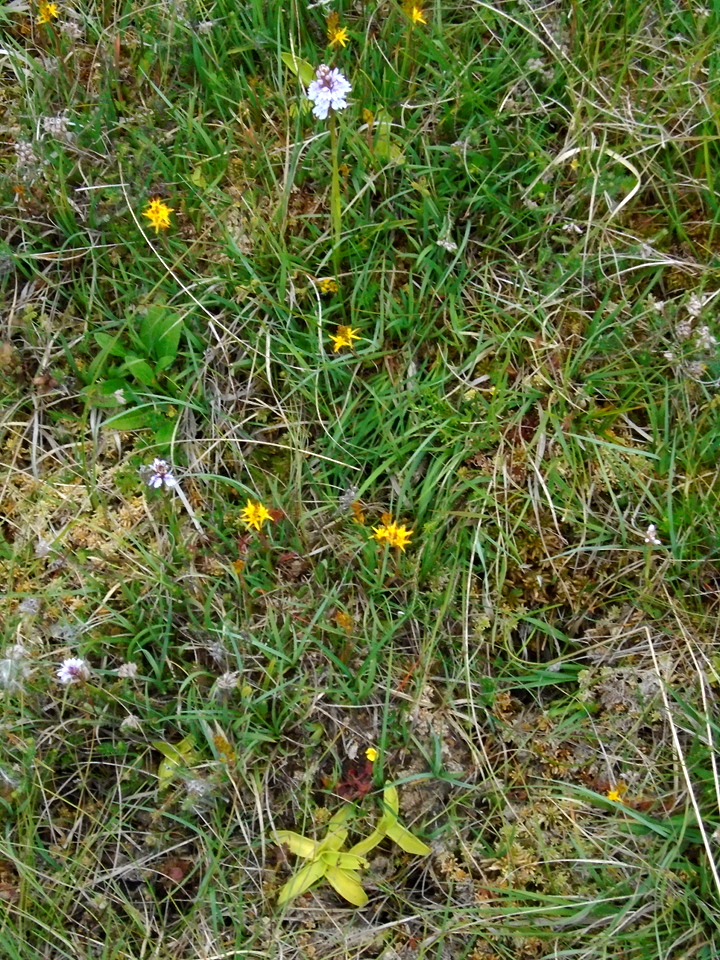
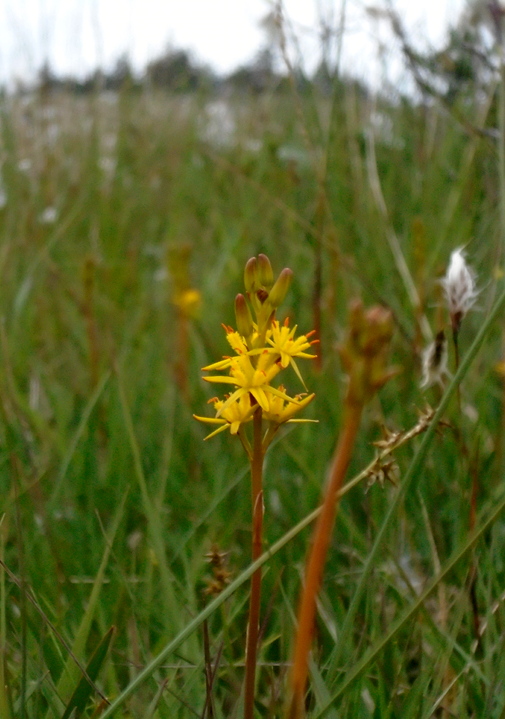
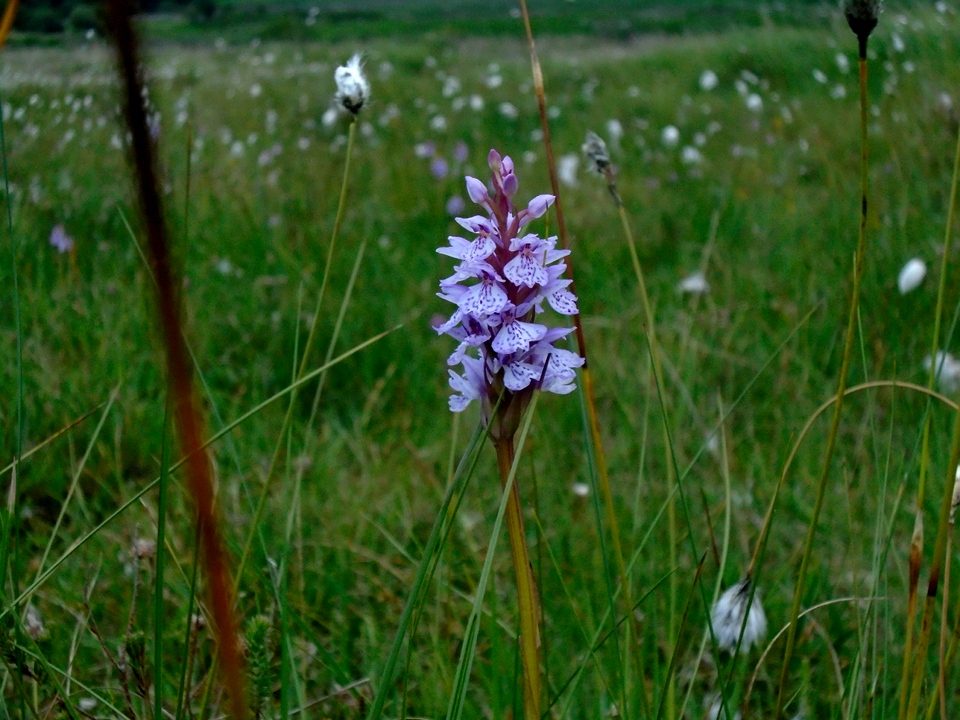
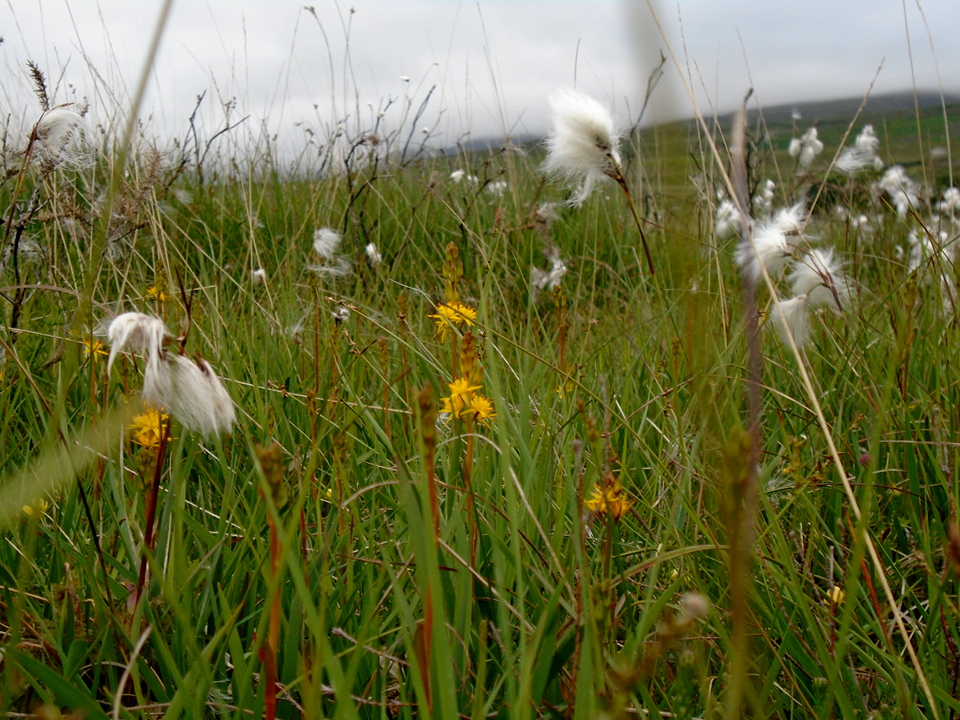
Waves and waves of fluffy, cottonwool-like bogcotton blowing in the breeze.  Dozens of mountain orchids.  Hundreds, thousands of the erect, stark, orange-coloured bog asphodel.  All to be seen in profusion in Anne’s Secret Garden against a backdrop of green mountain.

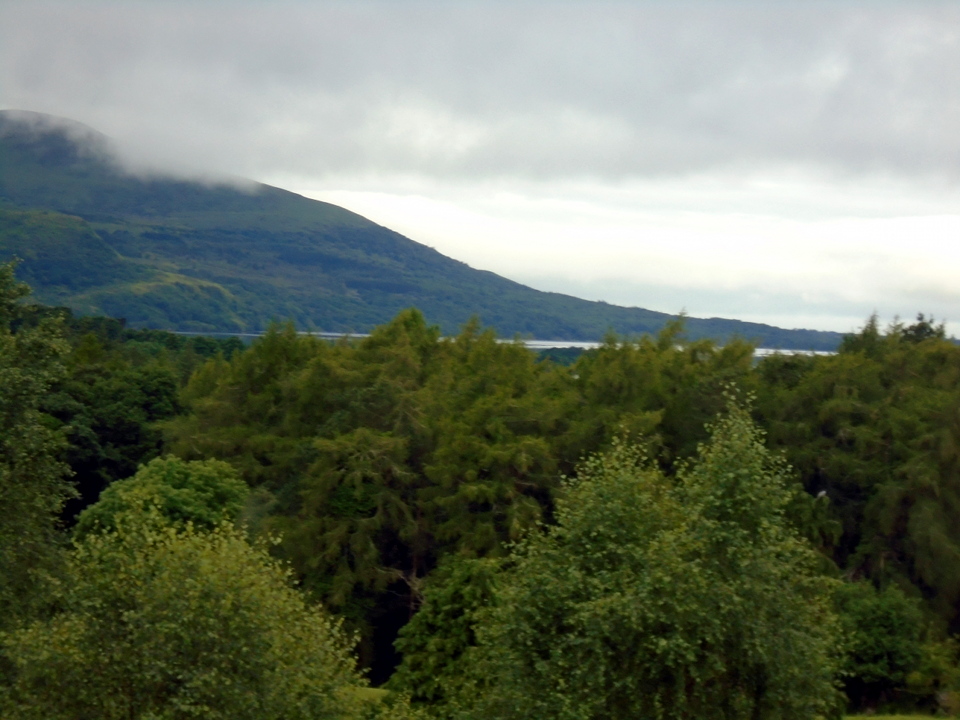
The wonders of nature these past days on the Mangerton Commonage – east and south of the L3016 Mangerton Road – as well as the woodlands looking down from Gallan Eile, reflect nature at its most vigorous richest.

When Mangerton mountain turns green the season has passed from the fullness of Spring to the richness of Summer.  It was well into June before this happened. For three precious months the mountains show their fresh growth.

DSC00618

DSC00628

The bogcotton (or common cottongrass; in Irish ceannbhan/white head) first started to show its white tufts about a month ago and then seemed to die back, as if it was going to have a particularly brief appearance this year.  But in the past weeks is showing its richest blossom in years.  “The rain gave it a great boost,” Kathleen said on Sunday evening.

At one time the bog cotton was used widely in this country for stuffing pillows and mattresses, which was freshly picked each year. The fluffy heads were once used for making candle wicks and were gathered by Scottish children for use as wound-dressings during World War 1.

In Gaelic Scotland it was a symbol of purity and beauty and the complexion of maidens was often said to be ‘as white as the cotton grass’ in Scots poetry.  In Ireland bog cotton was said to be cursed by St. Patrick.

DSC00635

DSC00632

The bog asphodel is all over the Mangerton commonage at the moment.  Thousands of short orange spikes shine out like little beacons. It was occasinally used as a substitute for saffron and as a yellow hair dye.

The second part of its botanical name ossifragum comes from two latin words meaning ‘bone breaking’.  It was believed that grazing the plant made the bones of sheep brittle.  This has been shown to be untrue.  It is probable that the bone weakenss is caused by the absence of mineral salts in the soil where the plant grows.

DSC00644

The heath spotted orchid of mountain and rough commonage is at least a month later coming into bloom than its lowland cousin.  Over the past two weeks they have blossomed in great profusion and are particularly rich in ‘Anne’s Secret Garden’ which I named for a neighbour who first told me about it.  The ‘garden’ is less than a hundred meters east of the L3016 just after the road leaves the Scots Pine woods a few hundred meters short of the foot of Mangerton.

DSC00625

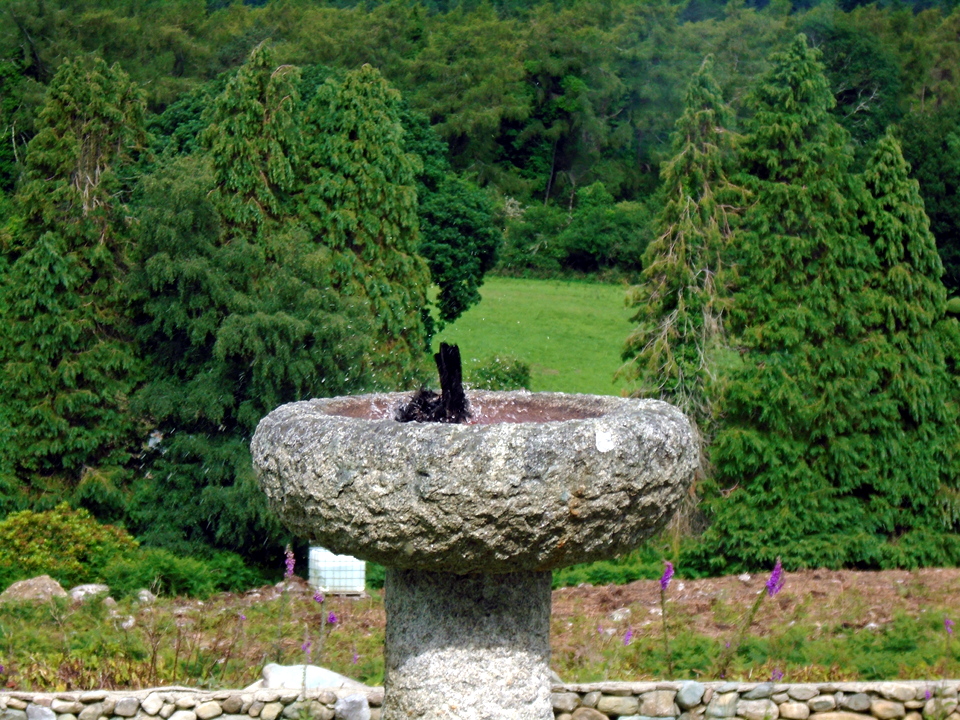
Looking down from Gallan Eile the woodlands are now showing the vitality of full growth and are at the pinnacle of summer lushness.  A blackbird is vigorously washing in the bird bath before he goes into hiding to moult in private.

DSC00626

Frank Lewis

Gallan Eile borders on the Mangerton commonage

– for more information or to book a stay at our self-catering rental accommodation Gallan Eile …

 Book Here

Lough Caum Boardwalk


AWESOME TORRENTS OF WHITE WATER

– and 20 pairs of rats eyes

It had been raining all day, the cloud was halfway down the mountains, a strong wind was blowing, the water from the Owencashla River was flowing ominously over the road. Hardly the ideal day to make a walk programme for radio.
IMG_1518

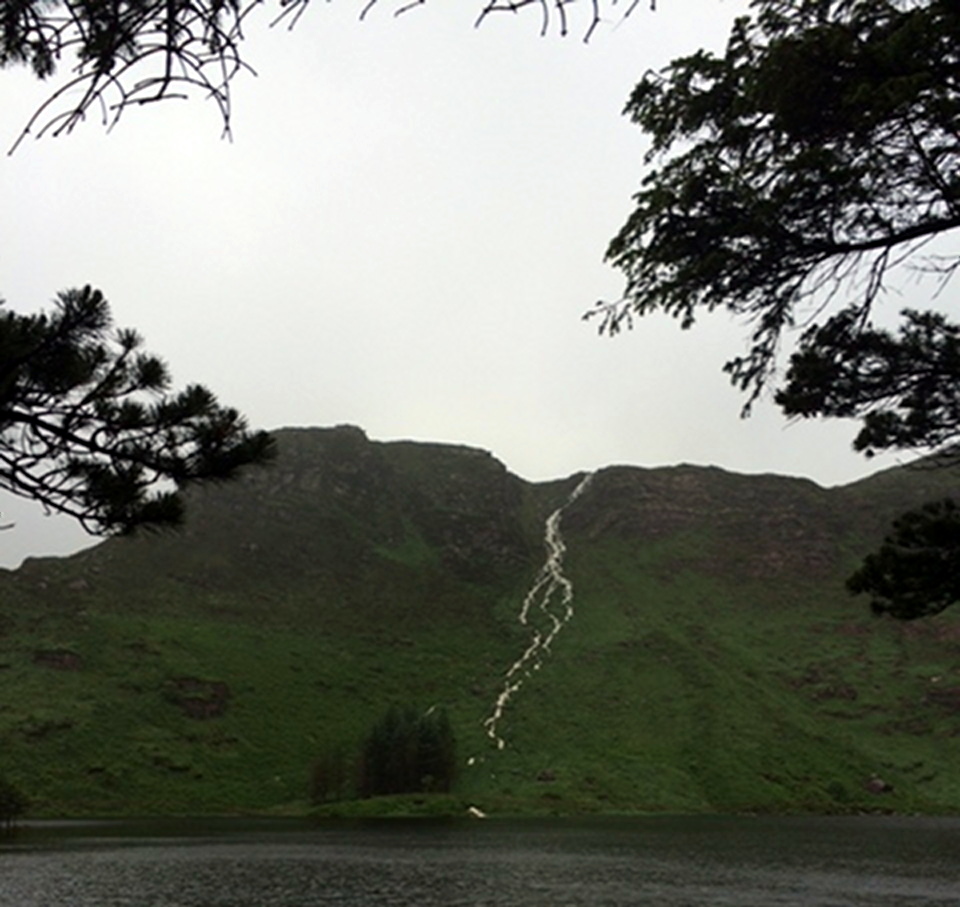
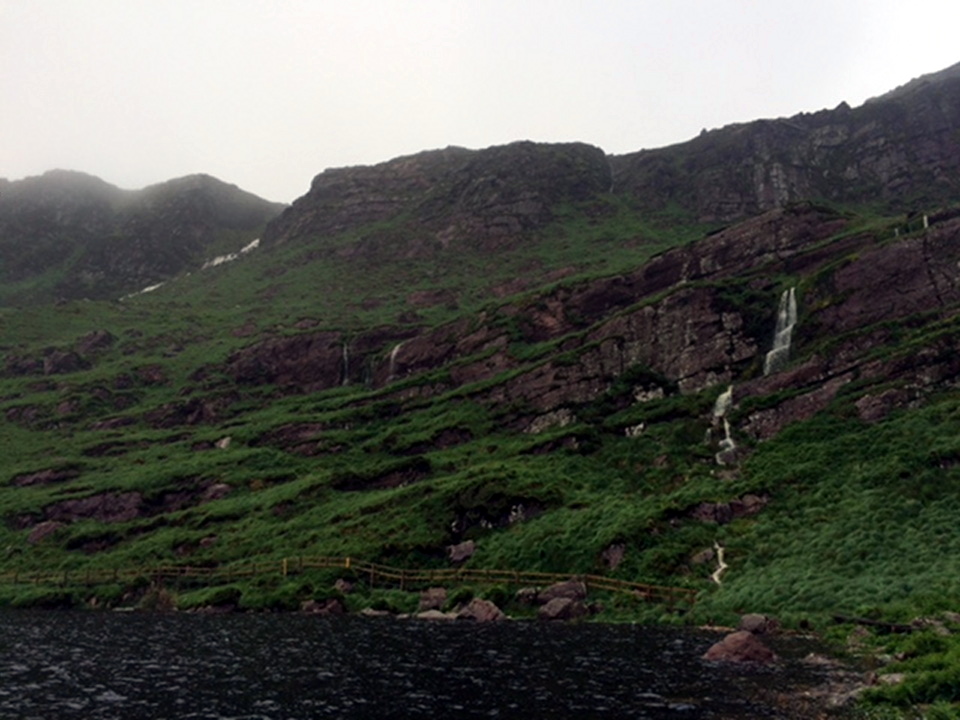
But conditions were ideal! We were in the 450 ha forest park of Gleanntan Easaigh (the valley of the waterfalls). Last Sunday afternoon water cascaded down steep slopes all around. An awesome torrent of white water in the Drishoge River raged precipitously down the gorge between Cummeen and Doon hills immediately south of the park entrance.

We drove up the forest dirt road because of the uncertain weather, the late hour and the much longer diversion because of extensive tree felling. As the road rose more and more waterfalls came into view.

A few hundred yards short of the upper carpark the Owencashla river, the outlet for Lough Caum, flows under the road but on Sunday it overflowed on the road. How deep was the water? How solid was the road? Another car ahead of us driving through reassured Siubhan somewhat.

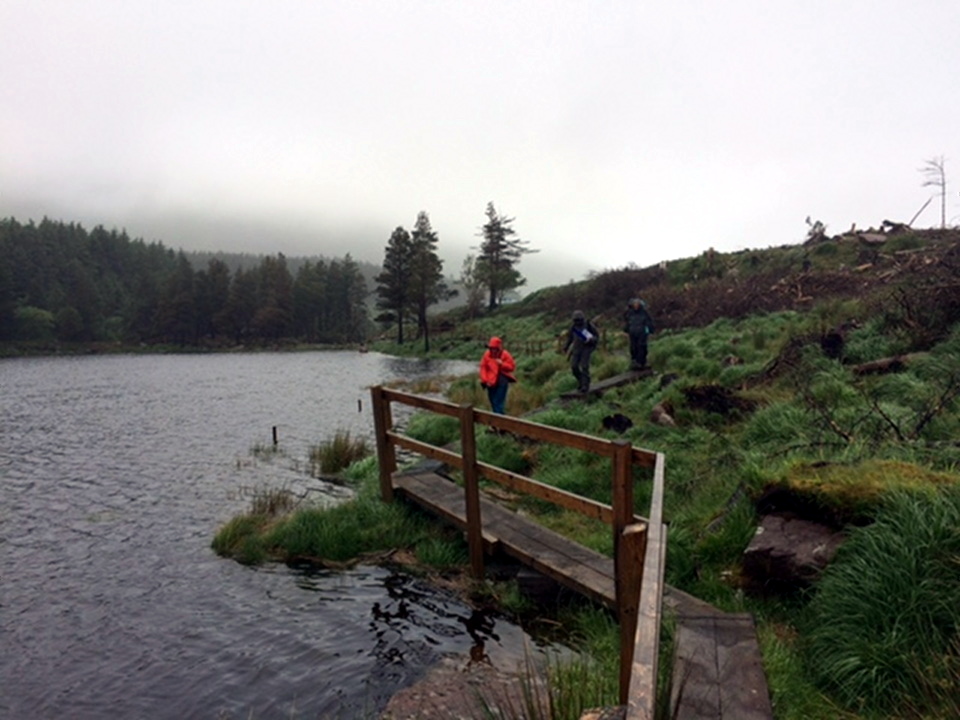
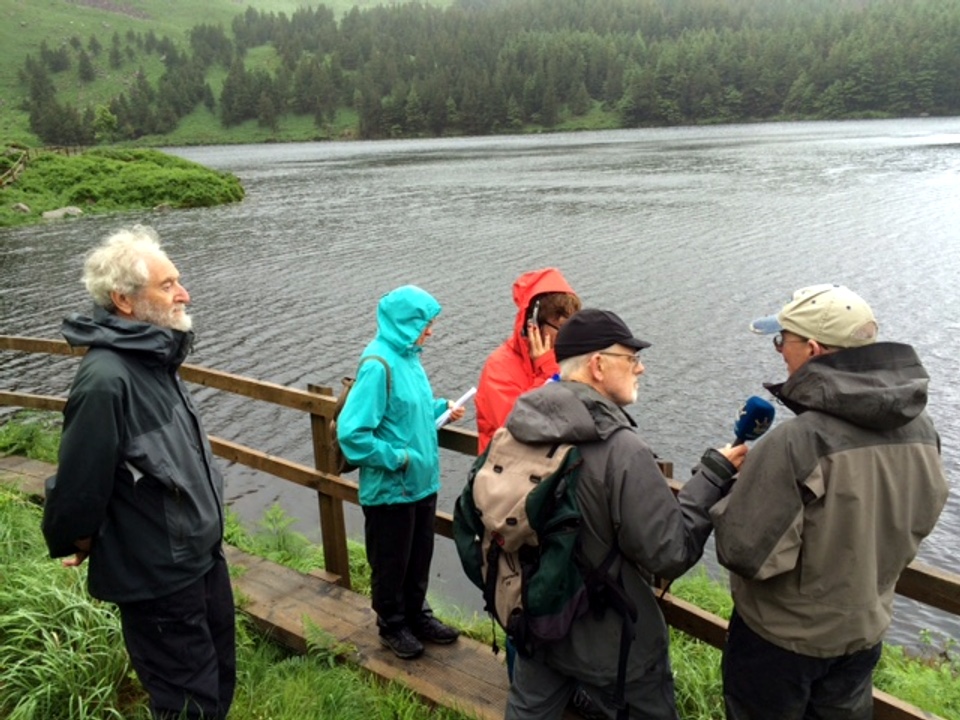
My fellow-walkers impressively arrived – and on time. For the radio programme I had walked the 1.8 km board walk around the lake the previous Wednesday picking out eight stops.

At the south eastern corner, immediately underneath the carpark John James O’Connor remembered in the late 1960s planting 700 to 750 trees a day, for £9 10s 00p a week. Bernie Goggin said the hills here started life hundreds of millions of years ago attached to the North American continent and at one time were as high as the Himalayas.

This year there is a bumper blossoming of the instantly recognisable purple foxglove that produces a drug for heart conditions and a concoction to treat children suffering from spasms in their sleep. Tradition tells that the medical properties are strongest between St John’s Eve (June 23) and old St John’s Day (June 29 or July 4).

Micheal O Coilean told of stone alignments here that pointed to the rising sun on midsummer’s day. Frank Maunsell spoke about the huge advantages of a managed fishery. Eithne Griffin vividly remembered twenty pairs of rats eyes staring up at her from under the desk in Castlegreogy National School when she was presiding officer here for the 1976 general election.

IMG_1516

At the south western corner the outlet from An Duloch (to Lough Caum) was within inches of covering the boardwalk bridge. About 6 kms west the archaeological landscape of Loch an Dun has some 90 remains, including 12 kms of stone walls dating from 1200BC. Here in a mild, calm humid day face and arms could be covered by midges – resulting in unrecognisable features.

These mountain lakes were gouged out by small local glaciers. On open areas rich, cotton-wool-like white bog cotton that in Scotland was a symbol of purity and beauty but was said to be cursed by St Patrick. It was used for filling mattresses and pillows. The fishing industry in Bradon and Tralee Bays underneath was wiped out by a move to much bigger boats in the 1960s and overfishing in the ’80s.

From a rise a little way along the south western shore there is a high view of both lakes. In the 1950s and ’60s wool from the local sheep was bought for between five and ten shillings a bag. By 2006 that had fallen to 25 cent a bag. Now sheep here are farmed for their meat. Following the Lispole ambush in March 1921 an injured volunteer was carried through Glantanassig to Tralee. Trigger happy Black ‘n Tans shot a Casey man in Castlegregory through his keyhole.

Half way along the south western shore two further waterfalls fell sheerly from the mountain ridge skyline. The north/south valleys along the Sliabh Mish moutain backbone of the Dingle Peninsula were the passageways used by local people. The mountain range is named for a Queen’s daughter, Mis, who went ‘native’ her but was brought back to civilisation.
IMG_1519

Now half way across the northern shore. The vividly pinky/red sandstone dominates all of the surrounds of Lough Caum. Sheer cliffs, rock outcrops, great boulders, immediately above us at this point a steep bank of loose scree.

Looking down the length of the lake the water surface rippled in the breeze. It was never very far from rain. Once or twice it looked as if there might be sunshine. It was a day when fish would be feeding. All of the fisherman’s prayers answered.

At the north eastern corner of the lake there are Sitka Spruce at both lake and mountain sides of the boardwalk. In 1916 local man Murt Leahy was to pilot The Aud safely into Fenit. Leahy failed to get on board because of a combination of the ship arriving several days early, the place was crawling with British military and a difficulty with the signalling.

Along the way a Kerry slug whose dot marking ranges from silver to a dull cream.

IMG_1531

The full effect of the highest and strongest waterfall – that we had passed along the south western shore – is to be had from midway down Lough Caum’s eastern shore. Cloud covered the top half of the mountains that surrounded the horse-shoe shaped valley south west.

Although less than 20% of fish survive to maturity the Castlegregory spur off the Dingle/Tralee train, that ran from the 1890s to 1939, was important in transporting fish to market.

The tangy tasting wood sorrell and mosses are profuse under the trees along the eastern shore. Along the lake shore here there are heavy rich clusters of the creamy flower of the mountain ash. Because of its reputed formidable magical and protective powers it was hung in houses to prevent fire, attached to hounds’ collars to increase their speed and used to protect milk and its products from supernatural harm.

Large tracks of conifer woods in the 450 ha Gleanntain Easaigh Forest Park have been clear-felled in the past decade. Since 2005 100 ha has been planted back, with over 40% of broadleaf and diverse species – including alder, birch, beech, rowan, red oak and larch. On all of the areas replanted 15 to 20% was left unplanted to provide extra open spaces along watercourses and roads. These areas along with other open spaces are being managed for biodiversity.

We spent over two and a half hours walking and talking, listening and scenting our way around the 1.8 km Lough Caum board walk. It is a whole new experience that excites young walkers and is a perfect route for everybody.

The Owencashla River outlet from Lough Caum was still in flood under the wooden bridge but the water was no longer flowing over the road.

– Frank Lewis

* The Saturday Supplement on Radio Kerry (which I produce and present Saturdays 9 to 11am; 97fm; listen live or on podcast at www.radiokerry.ie) this Saturday (June 25) features our walk around the Lough Caum boardwalk.

* Lough Caum is an hour’s drive from Gallan Eile.

Special thanks to Micheal Ó Coilean for the photographs

– for more information or to book a stay at our self-catering rental accommodation Gallan Eile …

 Book Here
Nature Notebook


THEY ARE MARRIED

– 3.5 year old Sarah on the intertwined oak and yew.

Swimming in Muckross Lake at Dundag last Wednesday (June 8) was idyllic. Torc Mountain falls sheerly to the southern shore.  The great bulk of Purple Mountain to the west.

Along the northern shore scalloped light blue limestone caves.  The largest yew wood in Europe along the Muckross Peninsula.  The slopes of Torc and Glena cloaked in the purple flowered rhododendron – that is threatening the regeneration of unique oakwoods.

The sandy beach on the eastern shore continues under the gradually deepening, crystal clear clean water.  As well the weather last Wednesday was warm, calm, dry and sunny.  The water felt warm – even on this first swim of the year.

DSC00586bogcottonBog Cotton on Mangerton Common a few weeks ago

On Thursday and Friday, with 14 year old grand-daughter Nessa, conditions were slightly less attractive but still very pleasant.  There were showers on Saturday.

From mid week rising wind and dropping temperature created more bracing conditions.  On Sunday Ness helped Siubhan prepare for the stations.  Dermot and three and a half year old Sarah came with me.

If we were going to swim at all … So we started at Dundag.  Never to be outdone Sarah togged off in a spare pair of knickers.  Holding hands we walked over stones to sand until the water was up to her belly button.  She dipped.  I swam around her.  We splashed – gently.  She protested not to go but accepted “we will stay longer the next day”.

Along the Scots Pine fringed lake shore through a tunnel of rhododendron, to the Dundag headland with it’s great high view over all of the lake and its surrounds.  Here you can see the mountains from the very graphically shaped Paps of Dana (on the Cork/Kerry border) to Ireland’s highest mountains, the McGillicuddy Reeks.

Was Devil’s Island torn from the top of Mangerton Mountain by His Satanic Majesty to fire at the great chieftain O’Donoghue over at Ross Castle?  But the island is made of limestone and the top of Mangerton is red sandstone.  There are other aspects of the story that don’t fit but that is the tale told by boatmen and jarveys.  Maybe the Devil has special powers but his aim is poor – Ross is a distance away.

High over Dundag Bay with a view of Muckross House.  Then along the trail named after 17th century agronomist Arthur Young, formerly the Jackoboy’s nature trail, called after a local character or perhaps remembering a now headless stone pillar in the lake or a fleeting visit by King James II making an escape after his defeat in the Battle of the Boyne – a story told by my late father with no basis in fact.DSC00600married trees

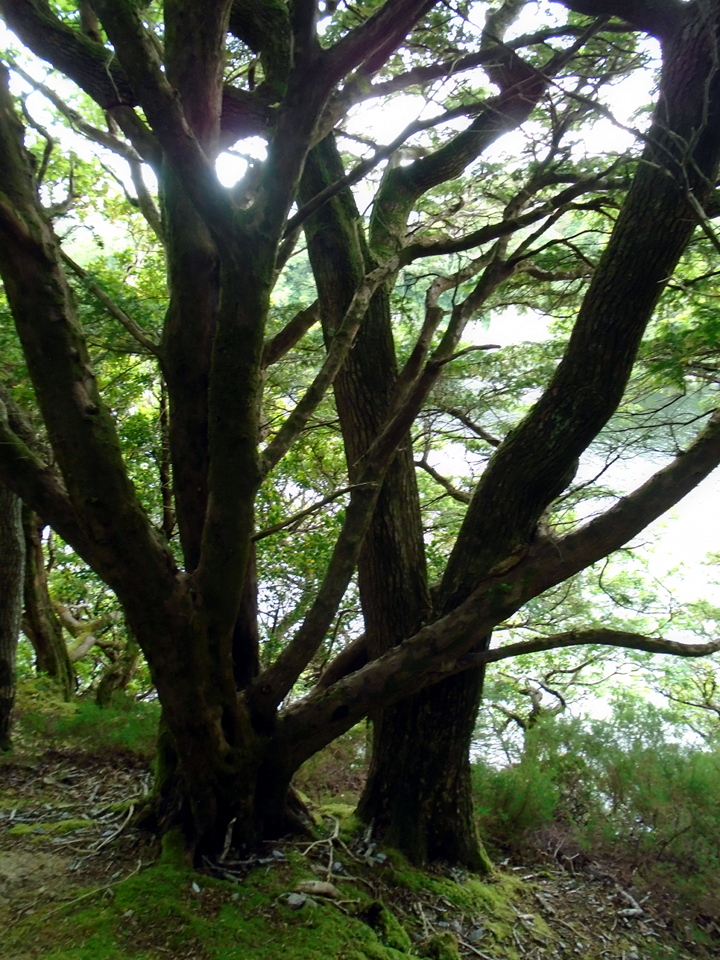
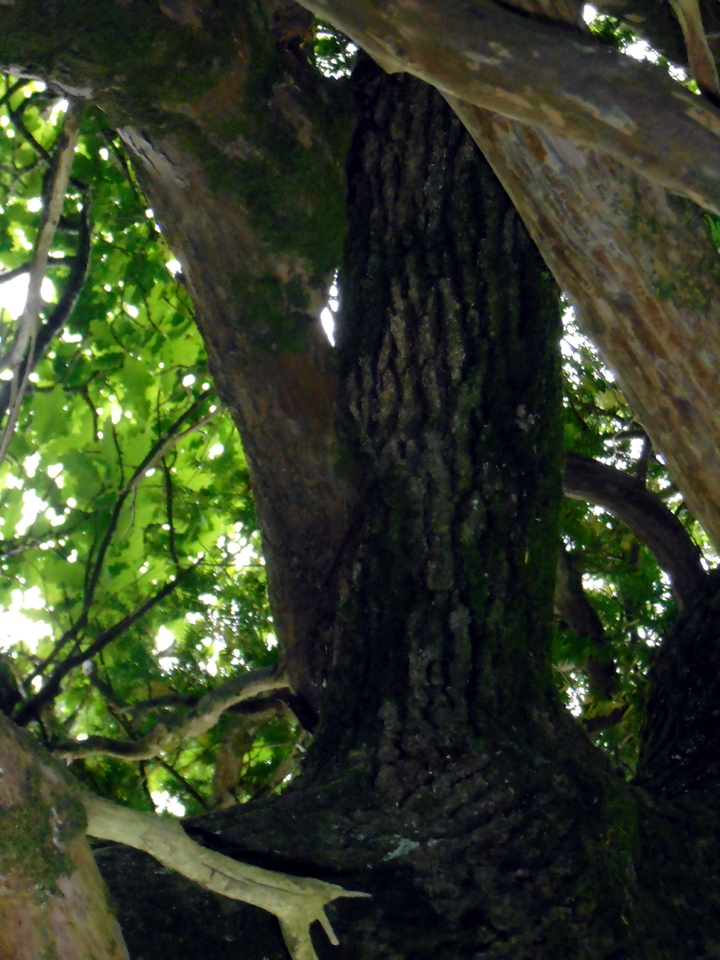
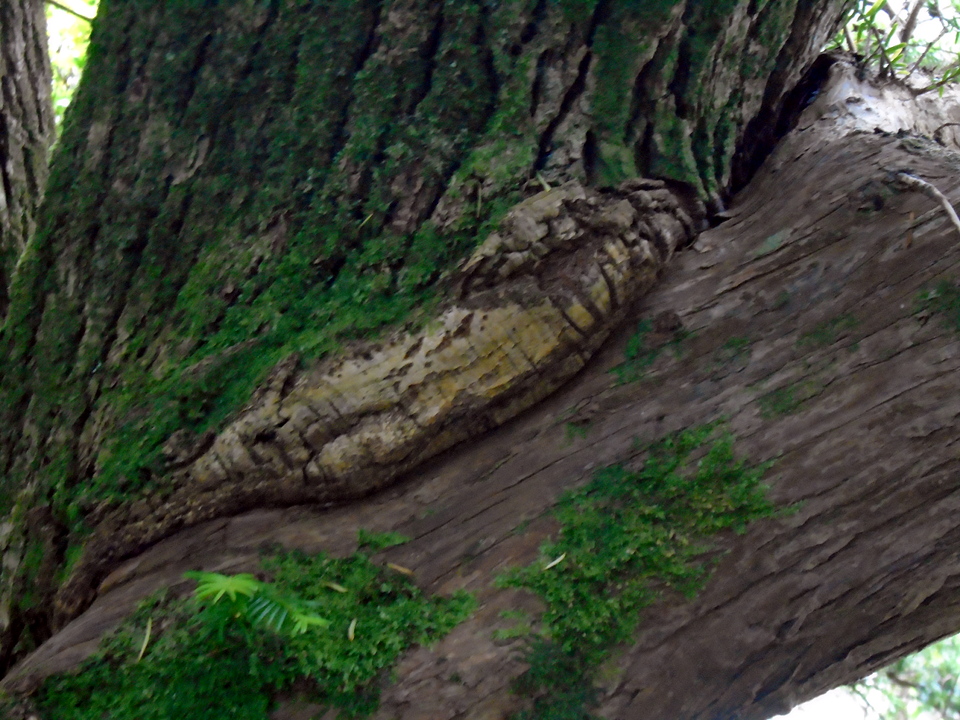
I have walked this route hundreds of times but only last Sunday noticed a yew with its branches wrapped around and grown into a neighbouring oak, “they are married” Sarah told me!

DSC00605married treeDSC00603married tree


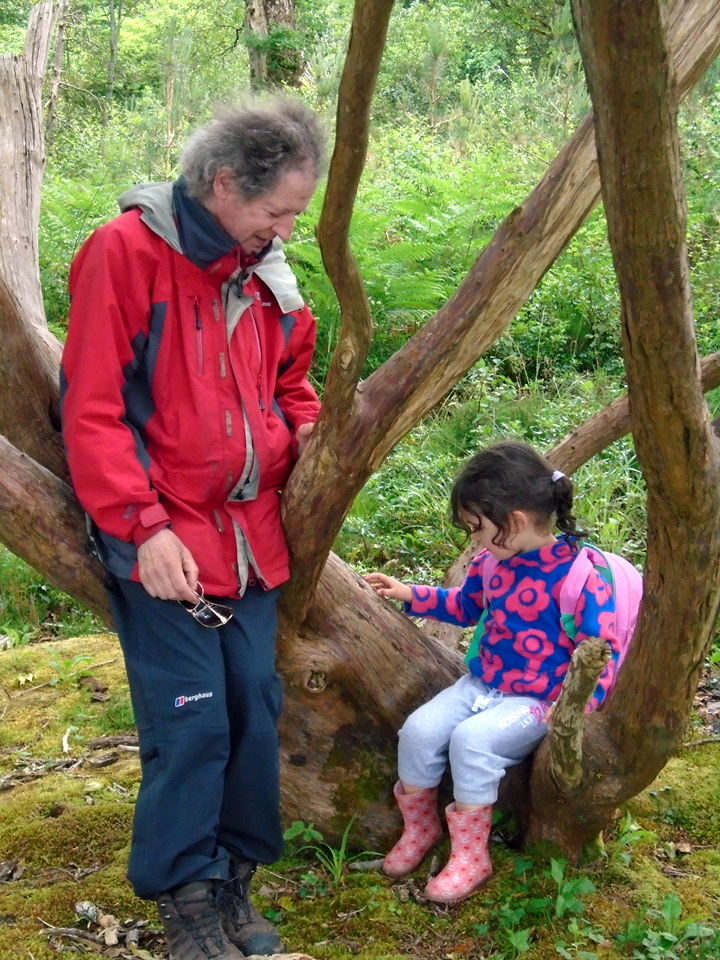
By huge oak and Monterey pine, across two exposed areas of bare limestone pavement increasingly cloaked. One by the native arbutus and the other by cotoneaster brought here from California. More and more yew. My two companions found a seat on a conveniently shaped yew. 

DSC00608dermot&sarah

While Dermot is happy to walk anywhere Sarah likes to be off the road walking through the woods, all the better if there is a climb or two. So we picked our steps carefully over crevaced limestone covered in carpets of mosses. We agreed to hold hands on the basis “I will save you if you fall and you will save me if I fall”.

Across a wet, mucky, boggy stretch with wild grass tussocks as high as Sarah. “My boots are muddy”, I was told. The climb up a rocky outcrop compensated. Back on a track, down stone steps probably laid for the visit of Queen Victoria in 1861. By a further open damp area covered in vividly yellow wild irises (yellow flags). 

DSC00611yellow flags

We had been walking for three and a half hour when we finished, all happily tired.

– Frank Lewis

– for more information or to book a stay at our self-catering rental accommodation Gallan Eile …

 Book Here
April 12, 2016

WILD GARLIC – IN WILD WEATHER

The rich green leaves of the wild garlic are at their most vibrant. A very occasional plant had produced a white flower.

snow at gallan in april DSC00190

Snow at Gallan
Snow at Gallan Eile

I was amazed. Only a few hours earlier we had had our heaviest lowland snowfall in several years and that was followed by very heavy rain.

 As we walked around Ross Island on Sunday afternoon the rain had eased off but it was continuing to fall.

Wood anemones on Ross Island

A little further on carpets of the delicate wood anemone nodded gently. The juice, especially from their creeping roots, is bitter and poisonous. A vinegar made from the leaves is said to have similar medicinal properties to mustard when used in a poultice.

While the wood anemone is stronger than it looks its flowers do not last long. As well their scent is not as attractive as their appearance. Another reason for not picking is that pheasants like to eat the flowers.

We continued along the Miners’ Trail to the ancient copper mines on the lake shore. These were first worked 4,500 years ago, making them the oldest copper mines in north western Europe. A stiff, cool breeze blew in off the lake.

Canoes from the Governor's Rock headland
Canoes from the Governor’s Rock headland

As we walked out on the Governor’s Rock coming towards us was the only other person we met on our three hour walk. I can not remember another time when Ross Island was so quiet.  Underneath the high headland on the great, wide expanse of Lough Leane three single person canoes looked very vulnerable.

Now through swamp woodland the occasional willow was fully leafed.  Then along the high track on the southern side of the Library Point.  An oak was covered in its coppery green early leaves.

Great expanse of wild garlic near Library Point

At Library Point Mouse Island looked tiny, O’Donoghue’s Prison ominous and, in between, Innisfallen was immense.

monkey puzzles DSC00214

Just beyond, the two great Monkey Puzzles marked a favourite picnic place of the Earls of Kenmare. Or was this another location where they might have built their mansion?

Just short of Library Point there is a huge area of wild garlic.  Each year I read about the salads, sauces, butter and meat flavouring for which wild garlic was used. Each year I mean to try some. Maybe this year. Garlic is the first extensive explosion of Spring. Sometimes mixed with the vividly yellow lesser celandine and followed by great carpets of bluebells

In our great figure of eight sojourn on Ross Island we went back along tracks through the south east of the island an extensive and quiet place of headlands, great beech trees, a might horse chestnut, inlets of the lake and finally to Ross Castle along the canal.  What must it have been like under the threat of Cromwellian canon in 1652?

There is no place like Ross Island – in any weather.

– Frank Lewis

– for more information or to book a stay at our self-catering rental accommodation Gallan Eile …

 Book Here
 

Nature Notebook 5 April ’16

FROM WINTER HAIL TO SUMMER SUNSHINE

– flower and bird announce the start of Spring

Over the past several weeks I have not been feeling myself. A hard, dry cough from a tickle in the throat, runny nose, sore head, chest, tummy. Most comfortable when I was lying down.

In an attempt to walk it out, always my best cure, I did two extended walks on Tuesday and Wednesday of last week.

faill a chrann viewDSC00135

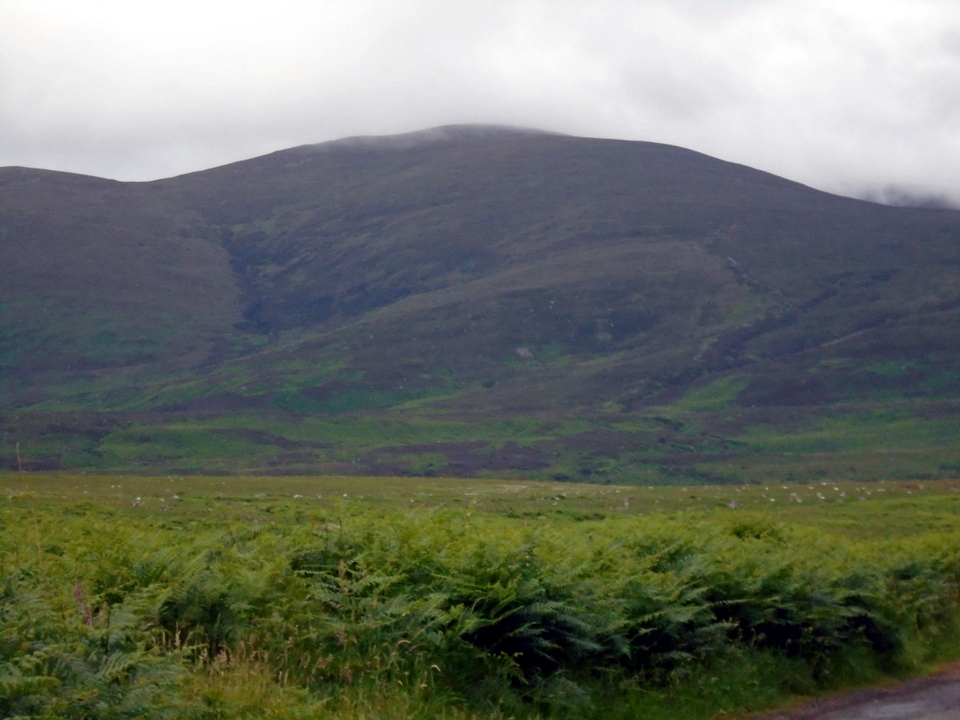
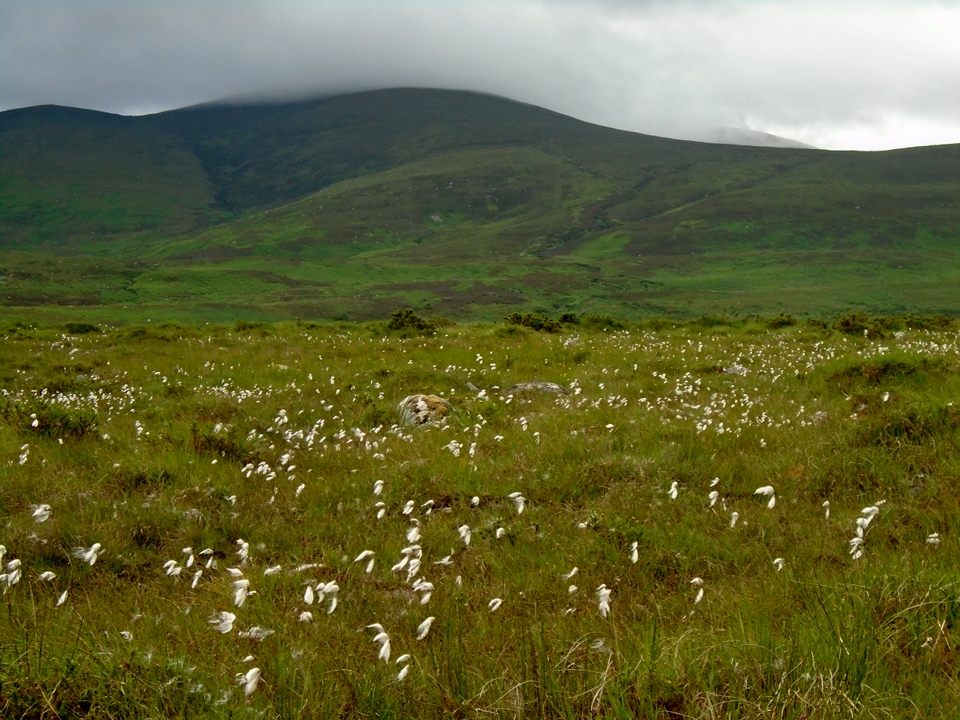
On Tuesday, a day that was generally fine, with the odd light shower, through the woods to Faill a’ Crann. Apart from battling with myself I noticed the first tight buds on the larch. For the last ten minutes of the outward journey there are increasing views of the Middle and Lower Lakes. From the highest point at the end of the forest road that huge panorama of the two lakes. The imminent snow-capped peaks of Purple, Tomies and Glena and on the far northern side of the Lakes the Sliabh Mish and other Dingle Peaks were also white.
tree panorama DSC00149

the shadow in the pine woods was particularly striking

At the end of Tuesday’s trek I felt no better. But neither was I any worse.

On Wednesday I set out to do a good walk without too much climbing. I headed directly south, through conifer woods along the western flank of Mangerton, over the Owengarriff, high above Torc Waterfall and its special micro-climate gorge.

Now rising gradually, from well-surfaced forest road on to paved path across the north face of Torc. The larch was now a green haze, a most spectacular annual evolution,the lightest, brightest, most delicate face of nature.
dark panorama DSC00158 Almost at the highest point the hail came down and down and down. I was clothed to contend with what was falling but it was vital to pick steps carefully on compacted ice.

The view from the high point here is one of the most accessible spectacular wild views of Killarney, through rhododendron, precipitously over the Middle Lake, then the Muckross Peninsula and arms length away the Lower Lake. When the clearing of the rhododendron here is completed and tidied – and the original route over to the Upper Lake is opened up – this will be a route without parallel.

When I got home, I certainly felt no worse, maybe a little better.

By Friday I felt better than I had been for a month.

with brian susan DSC00165

On Sunday last gathered Monterey Pine cones for an hour. In sunshine it was dry, calm and warm. Two hours along the north face of Torc was a summer experience. Then a saunter around Muckross gardens. Daffodils still in bloom. Magnolia blossom covering high leafless branches. Yellow tulips are at their richest and most vibrant best. Red rhodendron blossom against a white azalea/magnolia.

yellow tulips DSC00171 rhodosDSC00179

Spring has certainly started. Now nature will have new wonders every day. Even hour by hour ash, oak, horse chestnut will produce more and more leaf. In a few weeks the dawn chorus will be at its peak. Missing a minute in the outdoors during these days and a special event will have passed by.

Of course I feel better. How could I be otherwise?

Frank Lewis

all of this walking was done from our Gallan Eile holiday home

– for more information or to book a stay at our self-catering rental accommodation Gallan Eile …

 Book Here