FOXGLOVE OR FAIRY BELLS?
At the moment 262 foxgloves are in full bloom along the western or lakeside stone boundary at Gallan Eile. Four years ago Siubhan counted 98
The plant makes a demanding statement. Look at me!

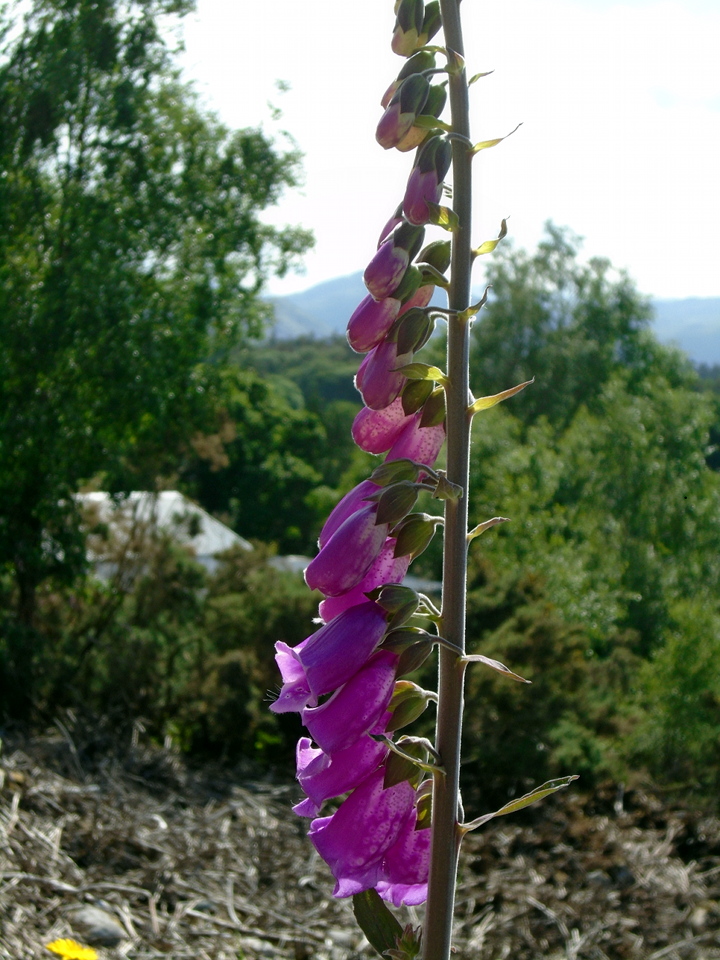
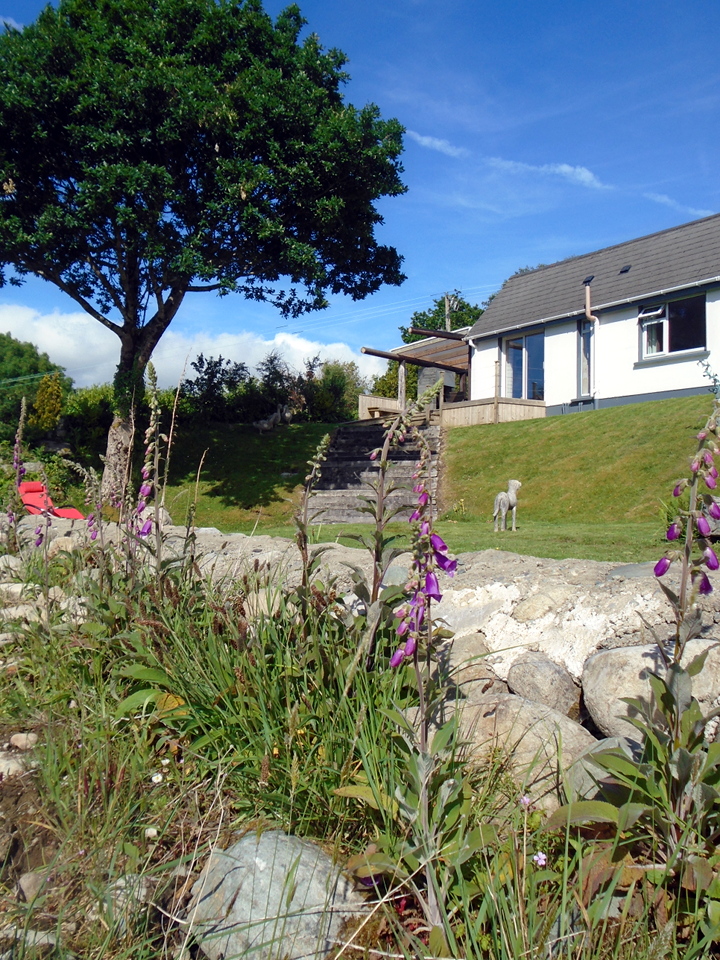
Each stem can have between 20 and 80 flowers.
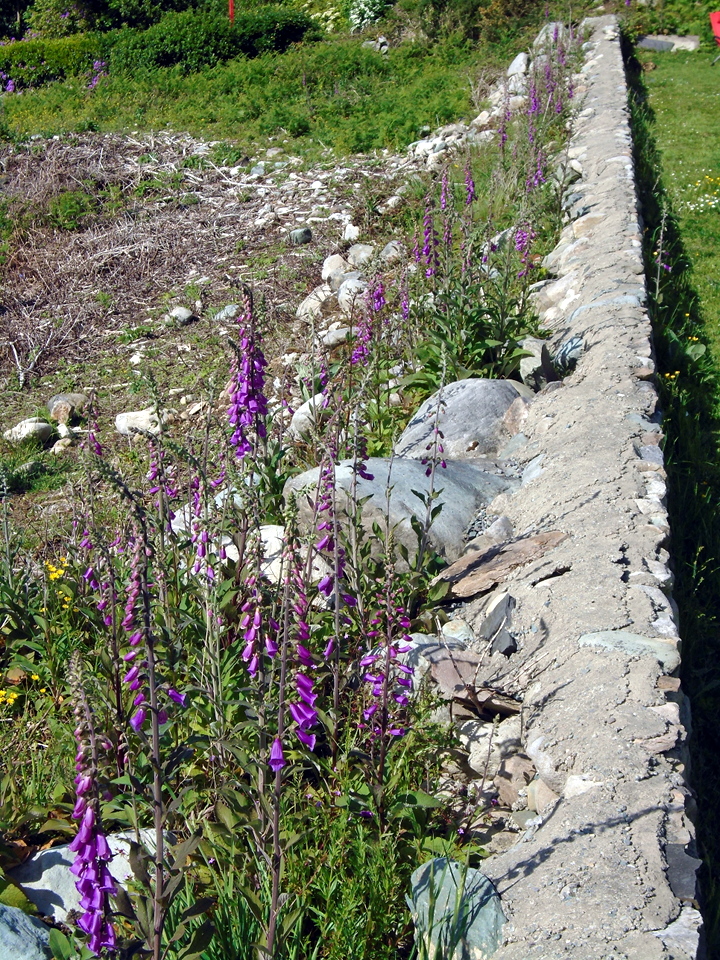
An avenue of honour or line of protection, or celebration of welcome with individual foxgloves up to two meters tall.
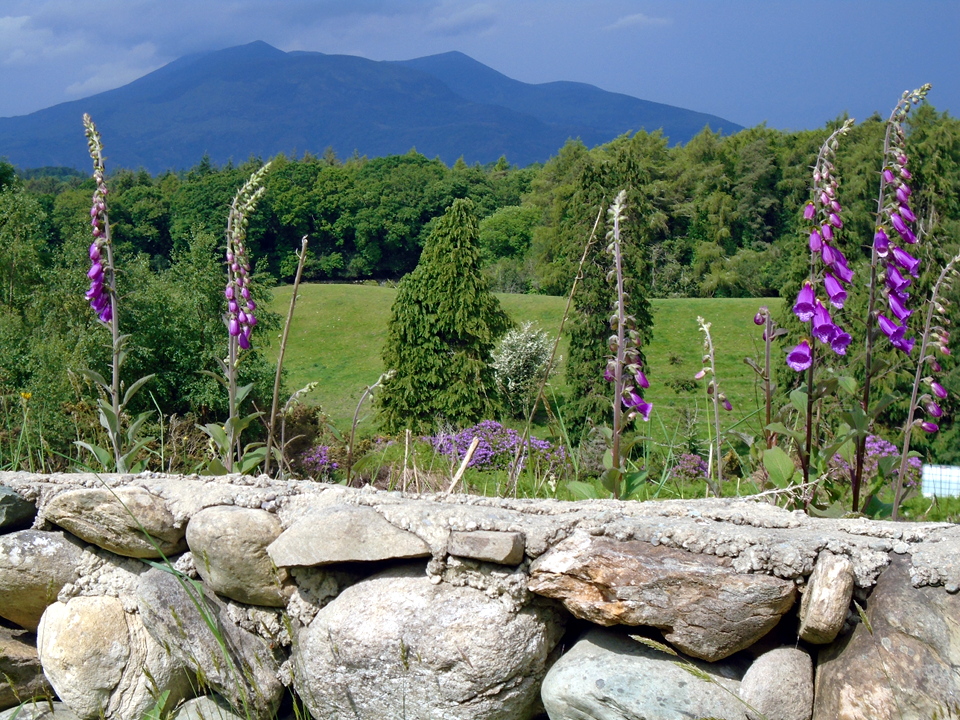
Our boundary is six foot high, with stones gathered from rough land retaining precious soil.
In the 18th century the recently introduced potato flourished in these high mountain paddocks.
Between the mid eighteen and nineteenth centuries Ireland’s population doubled forcing cultivation of these marginal areas.
By the mid nineteenth century eighty percent of the people of Kerry lived in one roomed mud cabins and survived on a diet of three meals of potatoes a day. For the month of July, between potato crops, they lived on cabbage.
When the potato was wiped out by a fungal disease in the mid 19th century Ireland lost up to a quarter of its population. Over a million people died of starvation and a similar number emigrated to Britain, the US and Australia.
It is unlikely the foxglove got its name from the belief that its bell-shaped flower made suitable gloves for foxes.
It is suggested the name might come from the Anglo-Saxon gliew – a musical instrument with many small bells – and fox could be a corruption of ‘folks’ meaning the ‘little folk’, or fairies. This might explain why I grew up calling foxgloves ‘fairy bells’?
The foxglove is very poisonous. It can be used to produce the drug Digitalis which in very small doses is used to treat heart complaints.
– Frank Lewis
for more information or to book a stay at our self-catering holiday accommodation, Gallan Eile …
No Comments